


Clothing Shipping Bag: Sustainable Shipping in Retail
Every Central European clothing retailer knows the challenge of getting clothing to customers safely and environmentally friendly, without unnecessary returns. Choosing sustainable shipping bags directly impacts customer satisfaction and saves costs thanks to lightweight, flexible materials that protect clothing from moisture and dirt. In this article, you'll discover practical insights and material options that contribute to a more professional image and fewer returns for your store.
Table of contents
- What are clothing shipping bags?
- Sustainable materials and environmentally conscious options
- Different types and closing options
- Practical use in clothing retail
- Advantages over traditional packaging
- Common mistakes when purchasing and using
Key Points
| Point | Details |
|---|---|
| Shipping bags are essential for clothing retailers | They offer a safe, efficient and environmentally friendly way to ship clothing. |
| Sustainable materials make a difference | Investing in biodegradable and reusable shipping bags reduces your carbon footprint. |
| Shipping bags offer advantages over traditional packaging | They are lighter, more flexible and more compact, which offers cost-efficiency and better protection. |
| Avoid common mistakes when purchasing | Choosing the right size and closure is crucial for successful shipping and customer satisfaction. |
What are clothing shipping bags?
Clothing shipping bags are specialized packaging materials designed to transport garments safely and environmentally friendly. These bags are essential for clothing retailers who want to ship efficiently and sustainably. They are typically made of lightweight, water-resistant materials that protect clothing from moisture, dirt, and damage during transport.
The key features of modern mailing bags are their versatility and functionality. They are available in various sizes and can hold both small accessories and large garments like coats and dresses. Sustainable fashion shipping options are increasingly using biodegradable materials and reusable packaging.
A well-designed clothing shipping bag has several crucial qualities. First, it must be strong to be tear-resistant. Second, it must be water-repellent to keep clothes dry. Finally, the bag must offer sufficient space without using excess material. This not only reduces waste but also helps optimize shipping costs for retailers.
Pro Tip: Choose shipping bags with a transparent front so customers can see the contents without opening the package, which can simplify the returns process.
Sustainable materials and environmentally conscious options
The apparel industry faces a crucial challenge: making shipping processes more sustainable by selecting environmentally friendly materials. Modern shipping bags are evolving rapidly, with a strong focus on biodegradable materials and reusable solutions that minimize retailers' environmental footprint.
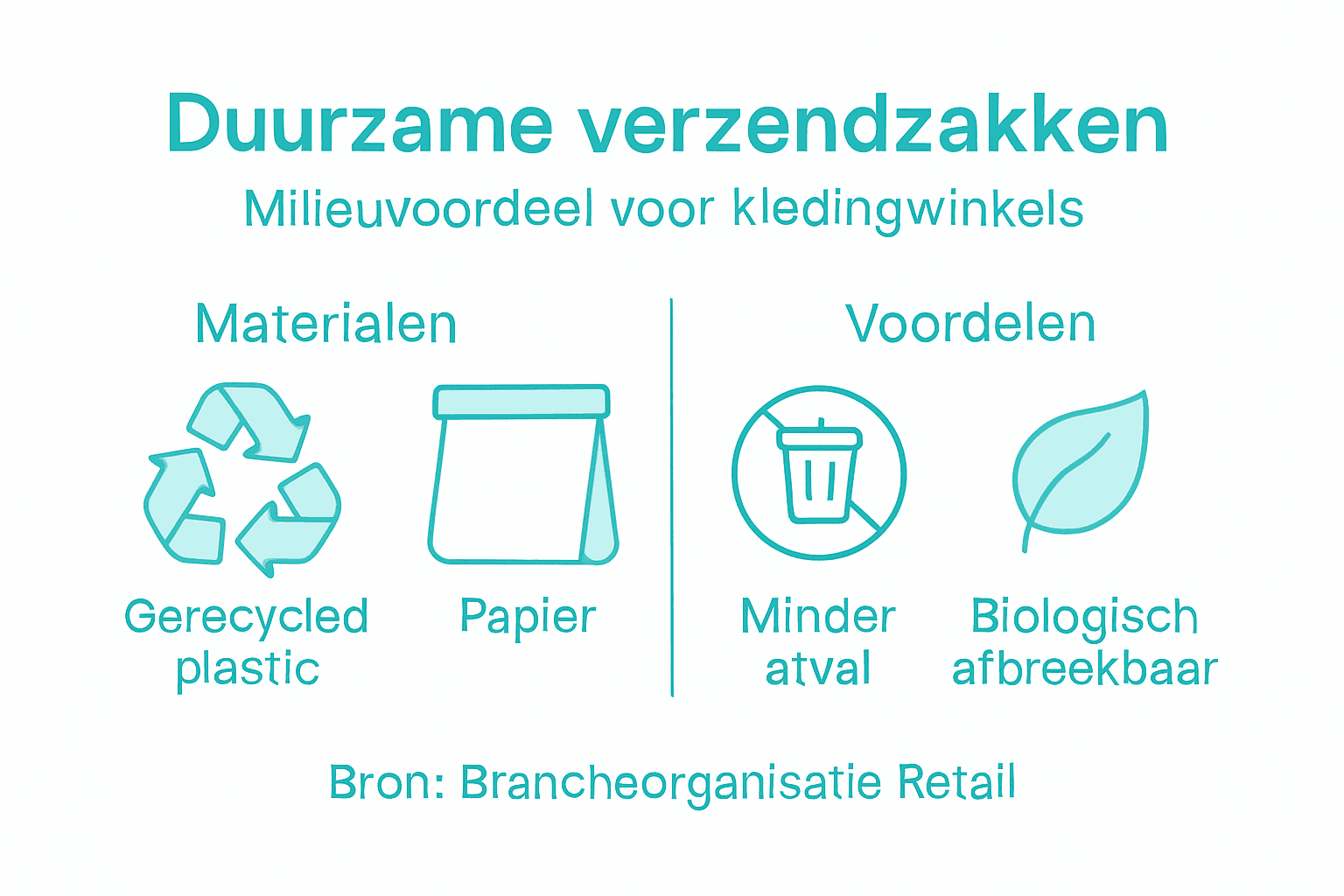
A promising development is the rise of sustainable packaging materials for Central Europe , with manufacturers increasingly developing recyclable and compostable alternatives. These materials are made from plant fibers, recycled plastic, or innovative composites that can be fully degraded after use without harming the environment.
The top sustainable material options for mailing bags currently include:
- Recycled plastic fibers from ocean plastic
- Biodegradable polymers based on corn starch
- Paper variants with high mechanical strength
- Hemp and bamboo composite materials
Companies must not only make materials more sustainable but also critically evaluate their entire shipping process. This means using less packaging, choosing more efficient transportation routes, and encouraging customers to reuse shipping materials.
Pro Tip: Invest in fully compostable shipping bags and communicate these sustainability efforts transparently to your customers to build brand trust.
Below is an overview of sustainable material options for mailing bags and their environmental benefits:
| Material type | Origin | Environmental benefit |
|---|---|---|
| Recycled plastic fibers | Oceanic plastic | Helps reduce plastic pollution |
| Corn starch polymer | Vegetable | Rapid biodegradability |
| Sturdy kraft paper | Wood | Compostable and recyclable |
| Hemp/bamboo composite | Plant material | Rapidly renewable raw material |
Different types and closing options
The world of clothing shipping bags is diverse and specialized, with numerous types designed to meet different shipping needs. The main category includes plastic COEX shipping bags, distinguished by their strength, waterproofness, and tear resistance, ideal for protecting delicate garments during transport.
A modern development in shipping packaging is the introduction of sealing stickers for perfect packaging that enhances the shipping experience. The various sealing options range from single to double adhesive strips, allowing customers to easily handle returns and retailers to optimize their packaging processes.
The most common types of clothing shipping bags are:
- Plastic COEX bags with single adhesive strip
- COEX bags with double resealable adhesive strip
- E-Green paper bags made of sturdy kraft paper
- Eco-friendly composite shipping bags
Each type has specific properties that depend on shipping requirements, desired level of protection, and sustainability goals. Retailers must carefully balance protection, ease of use, and environmental impact.
Pro Tip: Select shipping bags with resealable closures to simplify returns and improve the customer experience.
Practical use in clothing retail
In the modern clothing retail industry, shipping bags are essential for efficient and professional shipping processes. Strategic packaging choices can not only reduce shipping costs but also significantly enhance the customer experience by offering practical and functional solutions.

A crucial consideration is the ability to select clothing packaging that perfectly matches different garments. COEX mailing bags, for example, are particularly well-suited for letterbox mailing, resulting in immediate cost savings. They are lightweight, flexible, and simultaneously offer optimal protection against external influences.
The practical applications for clothing retailers include:
- Letterbox-sized packaging for smaller items
- Moisture-resistant bags for delicate materials
- Resealable packaging for easy returns
- Different sizes for different clothing categories
When choosing shipping bags, retailers should consider weight, size, garment fragility, and environmental impact. Proper packaging prevents damage, reduces shipping costs, and improves overall customer satisfaction.
Pro Tip: Invest in a standardized packaging system that can accommodate different types of clothing without using unnecessary materials.
Advantages over traditional packaging
Clothing shipping bags fundamentally differ from traditional packaging methods through their innovative and efficient design. Unlike rigid cardboard boxes, these modern packaging solutions offer a range of unique advantages that benefit both retailers and customers.
A crucial comparison demonstrates that paper versus plastic packaging offers significant logistical and environmental advantages. Shipping bags are significantly lighter, more flexible, and more compact than traditional boxes, resulting in immediate cost savings during transport and storage. They take up less space, reduce shipping costs, and simultaneously reduce the environmental footprint.
The key advantages over traditional packaging include:
- Lower weight and volume
- More flexible and adaptable to different clothing items
- Better protection for soft clothing products
- Easier return process
- Less packaging material and therefore more environmentally friendly
Modern retailers are increasingly choosing these innovative shipping solutions because they offer a perfect balance between functionality, cost-efficiency and sustainability.
Pro Tip: Choose shipping bags that optimally support both the protection of your product and your sustainability goals.
Here's a comparison of shipping bags versus traditional boxes:
| Aspect | Shipping bags | Cardboard boxes |
|---|---|---|
| Weight | Very light | Relatively heavy |
| Space usage | Takes up little space | Requires more storage space |
| Sustainability | Often reusable | Mostly one-time use |
| Postage costs | Lower due to compactness | Higher by weight/volume |
Common mistakes when purchasing and using
When selecting and using clothing shipping bags, retailers often make crucial mistakes that can harm their shipping processes and customer experience. Recognizing and avoiding these common mistakes is essential for efficient and professional business operations.
A critical mistake is failing to adequately consider the risks of cheap packaging materials . Retailers often choose the cheapest option, which can lead to insufficient protection of clothing items, an increased risk of damage, and ultimately customer dissatisfaction. The true cost of such savings can be much higher due to returns and reputational damage.
The most common mistakes when purchasing and using shipping bags are:
- Incorrect sizing that creates extra space or insufficient protection
- Ignoring material suitability for specific clothing types
- Careless closing methods that increase the risk of opening during transport
- Not taking moisture resistance into account
- Insufficient attention to environmental impact and sustainability
An effective approach requires careful consideration of every aspect of shipping packaging, from material selection to closure mechanism. The right balance between protection, cost, and sustainability is crucial for success.
Pro Tip: Regularly audit your shipping processes and gather customer feedback to continually improve your packaging strategy.
Sustainable shipping with the right shipping bags for clothing
The challenge of shipping clothing sustainably requires reliable, strong, and eco-friendly shipping bags that prevent damage and simplify returns. This article has highlighted the importance of choosing materials that are both water-resistant and tear-resistant, while also aligning with your retail business's sustainability goals. When purchasing shipping packaging, accurate sizing and choosing the right closure are essential to prevent problems during transport.
Discover how the right shipping bags can not only reduce your shipping costs but also make a positive impression on your customers with environmentally conscious choices. At Kadopapier.net, you'll find a wide range of sustainable packaging solutions, such as kraft shipping bags and durable sealing stickers, that seamlessly align with the principles outlined in this article. Want to start improving your shipping process right away while contributing to a better environment? Visit our website today and experience the difference in quality and sustainability.
Opt for professional and future-proof packaging by choosing our carefully selected materials that protect your clothing and enhance your brand. Start your sustainable shipping now with Kadopapier.net and check out our tips for sealing stickers for perfect packaging to complete your package.
Frequently Asked Questions
What are clothing shipping bags?
Clothing shipping bags are specialized packaging materials designed to ship clothing safely and environmentally friendly. They offer protection against moisture, dirt, and damage during transport.
Which sustainable materials are used for clothing shipping bags?
Sustainable shipping bags are often made from materials like recycled plastic fibers, biodegradable polymers, and durable kraft paper. These options help reduce the environmental footprint.
What are the advantages of shipping bags over traditional packaging?
Shipping bags are lighter, more flexible, and more compact than traditional cardboard boxes. This leads to lower shipping costs, less packaging material, and a simpler returns process for customers.
How do I choose the right shipping bags for my clothes?
When choosing shipping bags, consider the size and type of garment, the need for moisture resistance, and the desired durability. A good balance between protection and environmental friendliness is crucial.