


Lush Packaging Materials: Sustainability for Retail
A customer picks up a gift and immediately notices the difference: no unnecessary packaging, but a consciously chosen, sustainable presentation. In Central Europe, demand for eco-friendly alternatives is growing, especially among gift shop owners who want to differentiate their product range. Lush stands out with almost half of its range consisting of packaging-free "bare" products and packaging made from 90 percent recycled materials . This article shows how thoughtful packaging not only protects the environment but also attracts customers who choose quality and responsibility.
Table of contents
- What makes Lush packaging materials unique
- Different types and applications explained
- Circular use and recycling at Lush
- Benefits for retailers and the environment
- Alternatives and common mistakes to avoid
Important Points
| Point | Details |
|---|---|
| Circular Approach | Lush integrates circularity by having customers return empty pots for reuse, leading to loyalty and repeat purchases. |
| Sustainability in Materials | Most of the packaging is made from recycled material, which reduces the ecological footprint. |
| Naked Products | About half of the range consists of untreated products, which keeps the use of packaging materials to a minimum. |
| Customer Education | Lush helps retailers with clear instructions and information about sustainable use, which increases customer awareness. |
What makes Lush packaging materials unique
Lush has a fundamentally different approach than many other beauty brands: they don't treat packaging as a necessary evil, but as something you don't actually need at all. This philosophical difference results in concrete choices that make their packaging radically different from what you find elsewhere in stores. Roughly half of their product range consists of "bare" products —no packaging, no plastic, just the product itself. This sounds simple, but it has a tremendous impact. This approach diverts millions of plastic bottles from the waste stream worldwide. For gift shop owners, this means offering products that are already inherently sustainable, without needing additional packaging to sell that sustainable story.
Where Lush does use packaging, they go much further than just recycling logos on the label. The added value of luxury packaging also plays a role in their strategy, but they integrate this with true sustainability. They use 90 percent recycled material in their packaging and are constantly innovating to become 100 percent recyclable or compostable. Their black pots, for example, are made of 100 percent recycled polypropylene. This plastic can be reused at home for your own products, meaning the packaging itself has a second life before customers reuse it. They are also experimenting with carbon-neutral packaging, such as cork boxes, which absorb more carbon than they emit. These material choices make the difference tangible: customers get packaging they can touch, know it's resource-efficient, and don't feel guilty.
What truly sets Lush apart is that it has integrated its circular approach into its system. They offer return programs where customers can return empty jars for reuse. This is not only environmentally friendly but also gives you, as a gift shop, a story to tell. You're not just selling a product; you're selling a system you're part of. This also applies to their regular products. Shampoo bars, for example, eliminate water from the formula, meaning you pack more product into less space. This saves on transport, reduces carbon footprints, and uses significantly less packaging. For your gift department, this has practical advantages: these products are lighter, smaller, and easier to package in high-quality, minimal packaging.
Lush's palm oil-free ingredient policy aligns with their packaging philosophy. They minimize not only physical packaging but also the impact of what's inside. This shared sustainability narrative is becoming increasingly important for customers in Central Europe. When you include Lush products in your gift shop, you benefit from a brand that has already done the thinking for you. The packaging tells the story itself.
Professional Advice Use Lush's minimalist packaging as a selling point: emphasize to customers that less packaging means you save more money and that their gift is more environmentally conscious than standard options.
Different types and applications explained
Lush doesn't have just one type of packaging. They use a whole spectrum of materials, each tailored to the product's needs. This is important to understand because it demonstrates that sustainability isn't a one-size-fits-all approach. For solid products like shampoo bars and other "bare" products, the solution is simple: no packaging at all. These products speak for themselves. But as soon as you have products that need protection from moisture or oxidation, Lush switches to other solutions. They then use paper bags, aluminum cans, and recycled plastic pots . All of these materials are made from at least 90 percent recycled content. Lush's iconic black pots are made entirely of recycled polypropylene, meaning they are not only sustainable but also have had a second life before reaching the shelves.
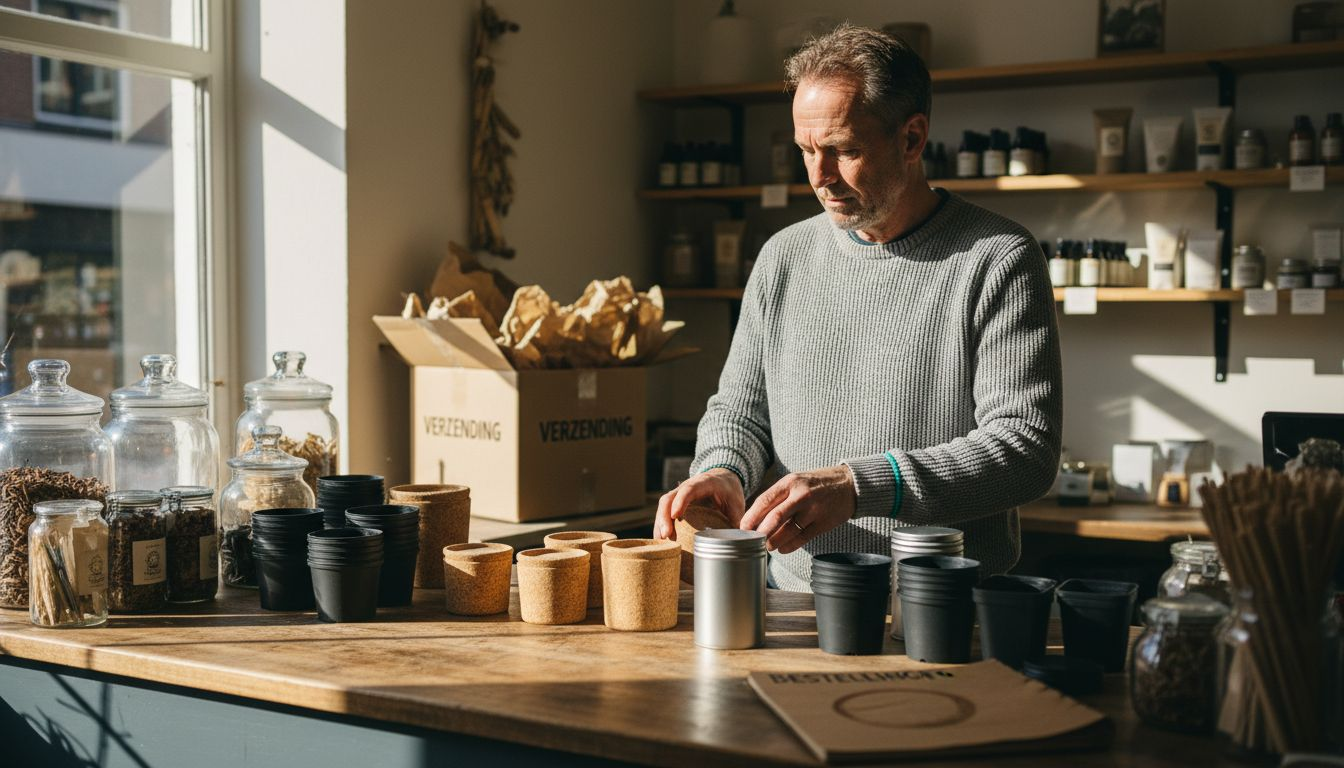
What's truly impressive are their more innovative solutions. For example, Lush introduced cork storage containers made from cork oak bark. This may sound exotic, but it's practically genius. Cork oaks grow back after their bark is harvested, so the material is completely renewable. Even better: these cork boxes are climate-positive packaging that absorbs more CO2 than they emit. This isn't just good for the environment; it's genuinely better than doing nothing. For gift shop owners, this offers an interesting story. When you sell these kinds of products, you're not just saying something is sustainable, you're saying it actually helps the climate.
The variety of applications continues. Lush is experimenting with refillable packaging so customers can refill the same jar over and over again. They also use Prevented Ocean Plastic , a material rescued from oceans and coastal areas, for certain plastic packaging. For products that truly need to be compostable, they use packaging that can be completely composted. This is crucial, because not everything labeled "recyclable" is actually recycled. Compostable material follows a much more secure path. The core of their approach is that the material matches the product . A washable product doesn't get plastic packaging. A product that needs to remain stable for a long time gets inert aluminum. This methodical thinking is what retailers need to adopt. It's impossible to say what the best packaging material is until you know what's being removed and where it's going.
For your own store, this means you can show customers that sustainability doesn't mean compromising on everything. Lush's packaging feels luxurious, looks good, and protects the product. At the same time, everyone knows it doesn't harm the planet any further. This combination of quality and responsibility is something you're increasingly seeing in consumer behavior in Central Europe.
Here's an overview of the different packaging materials Lush uses and their unique properties:
| Material | Main Feature | Environmental benefits | Practical Application |
|---|---|---|---|
| Recycled polypropylene | 100% recycled, robust | Reduces new plastic | Shampoo bars & cream jars |
| Paper | Minimal & compostable | Goes completely into the compost heap | Dry products, gift bags |
| Aluminum | Inert, can be closed well | Long lifespan, reusable | Sachets for moisture-sensitive items |
| Cork | Climate positive, renewable | Absorbs CO2 | Storage boxes for solid products |
| Prevented Ocean Plastic | Saved from water, circular | Prevents ocean pollution | Scrubs & limited editions |
Professional advice: Group Lush products in your store not only by category, but also by packaging type, so customers can see what variation in sustainability looks like and the difference between packaging-free, recycled, and climate-positive.
Circular use and recycling at Lush
Lush isn't just about sustainable packaging; it's about what happens afterward. This is where many companies fail. They design beautiful packaging, but have no idea where it ends up. Lush does things differently. They've created the "Bring it Back" program , a take-back program where customers can return six used jars for a free product as a reward. It sounds simple, but it changes everything. Customers get something in return, so they're actually making a donation instead of throwing the packaging in the trash. The jars don't go to landfill. They're reprocessed, recycled, or composted where possible. For you as a gift shop owner, this means customers who return. They return their empty jars, which means they buy something again. It's a circular system, not only for the environment but also for your revenue.
This returns program, however, is just one part of Lush's broader vision. They've established a Green Hub . This isn't just a recycling center; it's an innovative center where reuse, repair, and repurposing take center stage. This center combines waste management, education, and social impact to support a true circular economy. What happens here is that waste isn't seen as the end of the line, but as the resource for something new. Used packaging isn't thrown away; it's transformed. This thinking needs to be integrated into your store. When customers understand that their empty containers aren't worthless, but part of a larger system, their behavior changes. They don't see your store as a place to buy and throw things away, but as part of a community working together to create something better.
Compostability also plays a major role. Not everything you return can be recycled. That's why Lush uses fully compostable packaging. This means that if someone can't return it, it still doesn't go to landfill in the traditional sense. It breaks down in your compost heap and becomes soil. This is crucial for products wrapped in paper. With reusable packaging, you take things a step further. Customers can use the same packaging again and again, completely eliminating waste. These kinds of systems can be interesting for your product range. Remember: circular is not the same as recycling. Recycling is better than throwing away, but reuse is better than recycling.
What Lush is truly doing is closing the loop. They collaborate with suppliers to reduce the environmental impact of the entire supply chain, not just the packaging customers see. This means considering how materials are grown, processed, transported, and ultimately reused. This holistic thinking is what you can learn from them. When choosing packaging materials for your store, you don't just ask, "Is this recycled?" but "Where does this go when the customer is finished?" Asking this question changes your entire approach to retail.
Pro tip: Set up a collection point in your store for empty Lush pots and offer customers a small discount on their next purchase as a thank you for participating in the circular system.
This table shows how Lush's Bring it Back program differs from standard recycling:
| Aspect | Bring it Back Lush | Traditional Recycling | Business Advantage |
|---|---|---|---|
| Consumer reward | Free product per 6 jars | No direct reward | Greater customer loyalty |
| Circular effect | Pot is reused | Material is being processed | No waste, strengthens loyalty |
| Community feeling | Customers are part of the system | Individual behavior counts | Incentive for repeat purchases |
| Marketing value | Sustainability as a USP | Less visible | Positive brand association |
Benefits for retailers and the environment
When you incorporate sustainable packaging like Lush's in your store, you win on two fronts simultaneously. The first is for you. The second is for the planet. Let's start with the business reality. Consumers in Central Europe are increasingly concerned about sustainability. This is no longer a niche segment; it's becoming mainstream. When you offer products with sustainable packaging, you position your store as someone who understands, someone who is forward-thinking. This significantly strengthens your brand image . Customers don't just want to spend their money on products; they want to give it to companies that share their values. A gift shop that offers sustainable options feels like a winner for the customer. They feel better about their purchase. They talk about it with friends. This is marketing you can't buy; you earn it by being authentic.
Consumer satisfaction grows further when customers see that their choices truly make a difference. With Lush, they know their empty containers will be returned to a recycling system. They know their gift won't end up in a mountain of plastic waste. This assurance creates loyalty . A satisfied customer who values sustainability comes back. They buy more. They spend more. They bring friends. It's a virtuous circle. Moreover, it helps you with regulations. European laws like the PPWR (Productive Responsibility for Packaging) are becoming stricter. By using sustainable packaging now, you ensure you don't have to suddenly switch when new regulations come into effect. You're already prepared.
For the environment, the benefits are equally important. Sustainable packaging reduces your ecological footprint by using recycled and biobased materials. This sounds abstract, but it means concrete things. Less plastic in the oceans. Less gases in the atmosphere. Fewer toxins in groundwater. When you choose sustainable packaging, you're part of the solution, not the problem. Lush reduces waste streams because their system is circular. Jars are returned, not to landfills. This contribution to circularity not only benefits the company; it helps society as a whole. Your store becomes a node in a network of sustainable consumption.
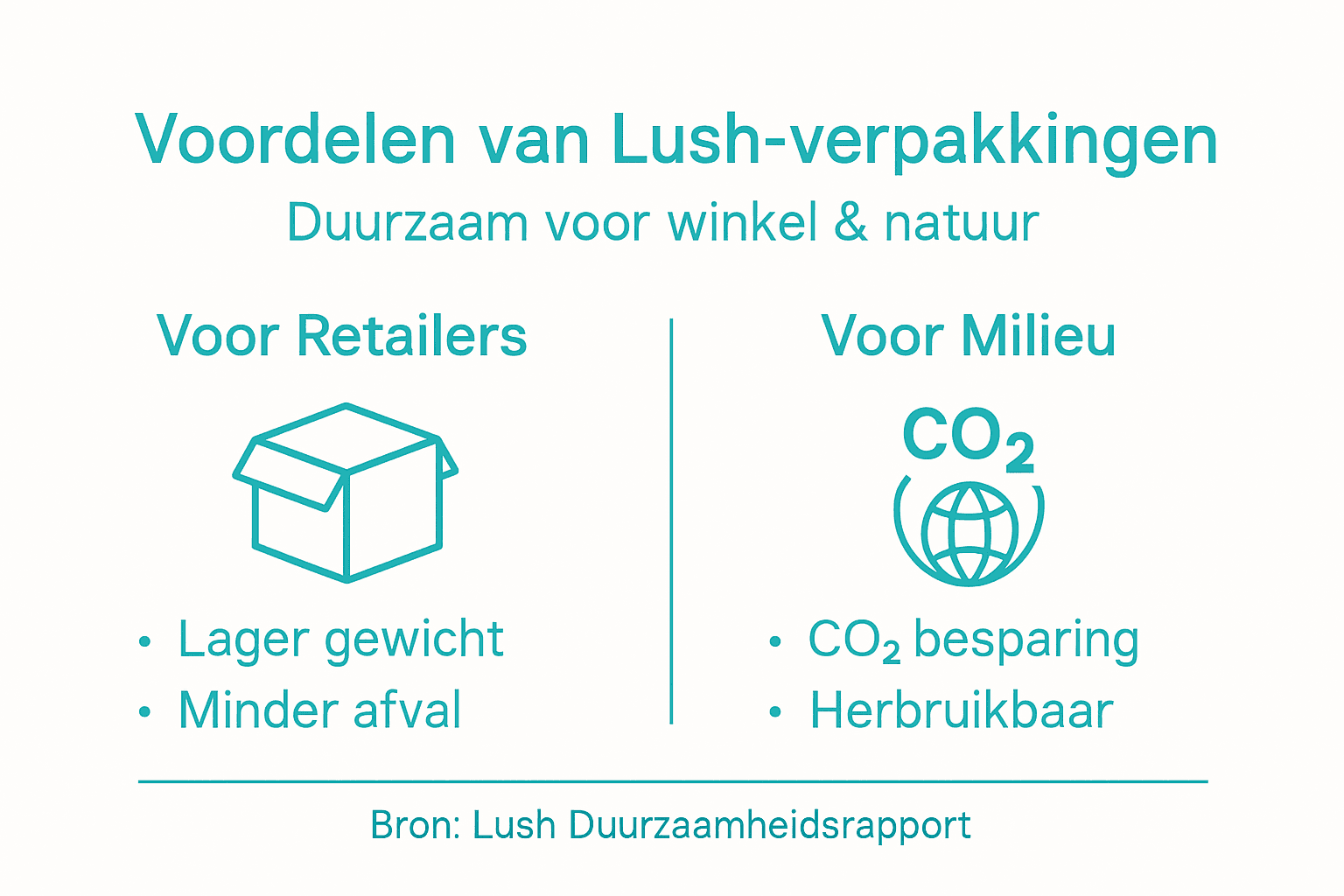
The practical benefits for you are also clear. Lush products are generally lighter than their liquid counterparts because many solid products don't contain water. This means lower shipping costs for you. Less weight means less transport, which in turn means less CO2. Your inventory is easier to store because it takes up less space. You can put more products on the same shelf. The packaging itself is sturdy and looks good, meaning your products won't arrive damaged and will be presentable in your store. No broken packaging means no return costs. This might not be a huge deal for a single gift shop, but cumulatively, it saves money. Moreover, your customers can reuse the packaging. Some will tell you they use the pretty jars at home. This is free marketing for you. The customer remembers your store every time they look at that jar.
What also helps is being able to tell the sustainability story. Many retailers stop doing this. They stock sustainable products without talking about it. This is a shame. Your sustainability is a selling point. Explain how the Bring it Back program works. Explain the difference between recycling and reuse. Help customers understand that their choices have an impact. This education creates ambassadors. Customers who truly understand why sustainability is important become loyal supporters of your store.
Professional advice Create a small display card with the Bring it Back program information and place it next to Lush products so customers know they can return empty containers and what they will get in return.
Alternatives and common mistakes to avoid
The urge to be sustainable can lead you into traps. This sounds counterintuitive, but it's true. Many retailers choose packaging materials that feel good but don't work well in practice. You want to be sustainable, so you choose something that sounds "biodegradable" or is labeled "compostable." Well done. But then you discover your customers have no idea how to compost it. Or worse: the packaging breaks down in an industrial compost heap, not in their backyard. This is a common mistake. You've chosen packaging that's theoretically good, but doesn't work in practice.
The KIDV model describes what's truly important: you need to consider functions, environmental impact, costs, and reuse in conjunction. Not just one of them in isolation. This means you can't just say, "This material is recycled, so it's good." You also need to ask questions. How much energy did it take to produce this material? Is it actually recycled in our country, or does it go abroad where it's forgotten? Can customers reuse it? This holistic approach will save you a lot of disappointment later. For example, some "eco-friendly" packaging uses enormous amounts of energy to produce. They only offset their carbon footprint after several use cycles. If customers don't reuse it, you're ultimately worse off than with a standard alternative.
Another common mistake is focusing solely on reducing packaging. Less isn't always better. Imagine: you reduce the size of a package so it uses less paper. But now your product arrives damaged at the customer's door. They return it. It goes back to the warehouse, is repackaged with even more packaging, and shipped elsewhere. You've created more waste by using less packaging. This is nonsense. The right approach is an optimal balance of functionality and sustainability for each specific application. Not universally less, but intelligently good.
Biobased and compostable materials have become popular, but they come with their own pitfalls. Many companies advertise compostable packaging without considering what happens next. For it to be effective, compostable packaging actually has to end up in a compost heap. In many European countries, composting household waste isn't yet standard practice. Your packaging ends up in the recycling stream where it doesn't belong, or in the incinerator. The effect is zero. Worse, you probably paid more for a compostable alternative. Biobased materials face the same problem. They feel good because they're plant-based, but without a full life cycle analysis, you don't know if they're truly better.
The crucial answer to these mistakes is simple: ask for integrated approaches . Choose suppliers who consider production, logistics, and reuse. Lush does this. They consider not only what happens in the store, but the entire journey. From the growth of raw materials to the return of empty jars. This perspective will help you avoid mistakes. When evaluating alternatives, ask yourself these questions:
- Can this actually be recycled or reused where my customers live?
- How much energy did it take to make this?
- Does it protect the product well enough so that it does not arrive damaged?
- Is the cost reasonable, or am I paying for a marketing premium?
- Can I explain to my customers how to recycle or reuse it?
When you choose Lush, you're essentially choosing someone else who's already answered these questions. That's why it works. They've done the thinking so you don't have to.
Professional advice Ask your Lush supplier for insight into their life cycle analysis and clear instructions for customers on how to return empty pots and how the Bring it Back system works.
Make Sustainable Packaging the Heart of Your Store
The article's challenge revolves around how retailers can address the growing importance of sustainability without compromising on appearance and functionality. Lush demonstrates how circular packaging and minimal material use can combine to reduce waste and increase customer loyalty. Many gift shops struggle with this challenge as they seek sustainable solutions that are also practical and appealing. The key lies in a clever combination of reusable materials, eco-friendly alternatives, and a compelling story that resonates with customers.
At Kadopapier.net, we understand this need and offer a wide range of packaging materials that seamlessly align with sustainable retail policies. Whether you're looking for high-quality wrapping paper, compostable gift bags, or stylish ribbons, our selection will help you continue Lush's packaging story in your store. Use our carefully selected, eco-friendly options and strengthen your customer engagement. Discover how you can transform your packaging and make a positive impact at Kadopapier.net .
If you want to get started right away and make your packaging future-proof, choose sustainable materials at Kadopapier.net and give your customers the confidence that their purchases are truly contributing to a better world.
Frequently Asked Questions
What are the benefits of Lush's 'naked' products?
Lush's "naked" products are packaging-free, meaning less plastic waste. This contributes to a more sustainable environment and reduces the carbon footprint.
How can I return old Lush packaging?
With the "Bring it Back" program, you can return six empty jars to the store. In return, you'll receive a free product, making returns more appealing.
What makes Lush's cork packaging climate positive?
Cork packaging is climate-positive because it absorbs more CO2 than it emits. This is because the bark of cork oak trees is used, which is renewable, and the trees continue to grow after harvesting.
How much of Lush's packaging is recycled material?
Approximately 90% of Lush's packaging is made from recycled materials. This includes their iconic black pots, which are made entirely of recycled polypropylene.