


Candy Packaging: Sustainability and Legislation in 2026
Presenting sweets attractively is one thing, but complying with the increasingly stringent EU packaging regulations requires more smart choices than ever before. Retailers in Central Europe face a mix of demands on food safety, environmental impact, and customer experience. In this article, you'll discover which packaging trends and materials make the difference, and how to comply with the latest packaging regulations for seasonal promotions while maintaining cost-effectiveness and style.
Table of contents
- What makes candy packaging unique
- Main types of candy packaging for retail
- European rules for candy packaging from 2026
- Sustainability and material selection in practice
- Avoiding common candy packaging mistakes
Key points
| Point | Details |
|---|---|
| Food safety is crucial | Ensure that all packaging meets food safety standards and does not release harmful substances. |
| Sustainability is a priority | Choose materials that are recyclable or reusable to meet future legislation and customer expectations. |
| Aesthetics influence sales | Attractive packaging attracts customers and can significantly increase candy sales. |
| Be prepared for regulations | Start adapting your packaging now for new EU regulations coming into effect in 2026 to avoid problems. |
What makes candy packaging unique
Candy packaging isn't just any packaging. It must protect food while simultaneously selling the product as soon as a customer sees it in the store. This is a unique combination that demands special attention to detail.
The first challenge is moisture resistance . Candy absorbs moisture from the air and becomes sticky or hard. That's why many retailers use packaging with an inner layer of plastic or aluminum foil. This keeps moisture out, keeping your candy fresher longer. With gift wrap or decorative packaging for seasonal promotions, you need to pay extra attention to this, as it looks attractive but doesn't always provide sufficient protection.
Another issue is food safety . Candy packaging that directly touches food must comply with strict regulations. It must not release harmful substances. This differs from regular packaging for other products. When packaging candy, you must be certain that the material is food-safe.
The aesthetics are just as important. Children and adults also buy candy with their eyes. Beautiful packaging makes the product stand out. For seasonal promotions, such as Christmas packaging or Easter products, an attractive design can make the difference between a good and a bad sales day. Festive packaging ideas can provide plenty of inspiration.
The barrier functions of candy packaging are crucial. They protect against light, oxygen, and physical damage. Many confectionery products can discolor or oxidize when exposed to light. The packaging must prevent this without damaging the product itself.
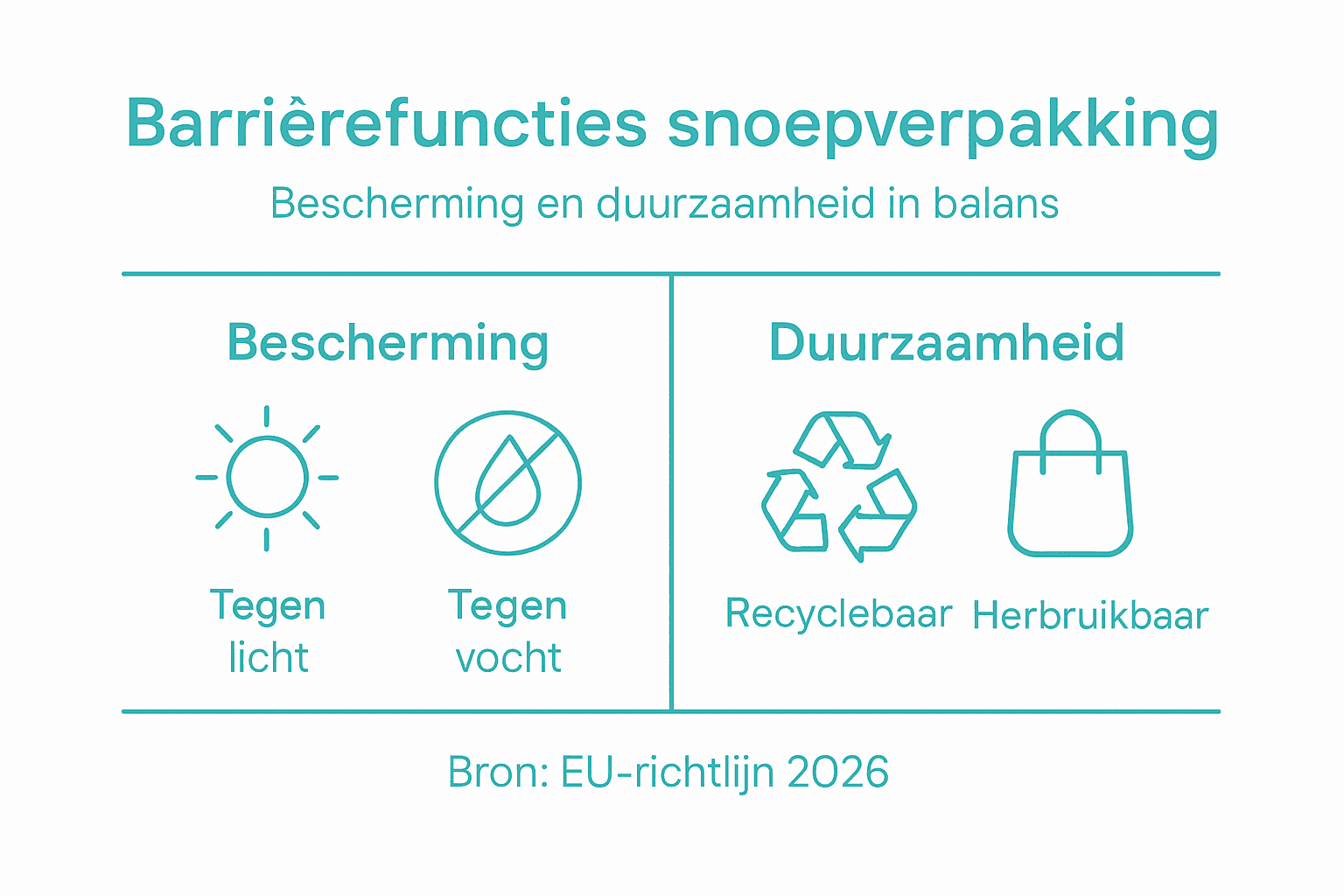
Finally, sustainability is playing an increasingly important role. Customers increasingly want to know whether their packaging is reusable or recyclable. This is especially true for seasonal items, where retailers want to differentiate themselves.
Inside: Always choose packaging that achieves at least two goals simultaneously: protecting food AND presenting the product attractively, optimizing both function and sales.
Main types of candy packaging for retail
As a retailer, you have to choose from various packaging types, each with its own advantages. The right choice depends on your product type, budget, and how you want to display it.
Clear plastic bags are the most popular. They display the candy, encouraging purchases. These bags are inexpensive and protect against moisture. They're ideal for seasonal promotions because customers can immediately see what they're buying. The downside is that they're not very environmentally friendly.
Paper packaging is gaining popularity. Many customers prefer paper because it feels more sustainable. Cardboard boxes and kraft paper bags give your sweets a premium look. Retail paper options offer many options for customizing your product range.
Metal tins are perfect for gift sets and festive occasions. They protect sweets perfectly and look luxurious. However, they are more expensive than other options. For Christmas collections or special occasions, tins are a strong choice.
Window packaging combines the best of both worlds. It has a cardboard exterior with a transparent window that customers can see through, giving your product both visibility and protection. This type is becoming increasingly popular in retail.
Bulk packaging is attractive for companies that want to offer candy in larger quantities. These are larger boxes or bags, often used for office snack sets.
Tasting tip: Always test small quantities of each packaging type in your store before buying in bulk to see which type sells best with your specific customer base.
Below you will find an overview of the most important advantages and disadvantages of each type of candy packaging:
| Packaging type | Important advantage | Biggest disadvantage |
|---|---|---|
| Transparent plastic bag | Promotes impulse purchases | Environmental impact is high |
| Paper packaging | Attractive and sustainable | Less moisture protection |
| Metal tin | Premium look, reusable | High cost price |
| Window packaging | Product visibility with protection | More complex recycling |
| Bulk packaging | Advantage with larger volumes | Less suitable for gifts |
European rules for candy packaging from 2026
Starting in 2026, packaging regulations across Europe will change drastically. As a retailer in Central Europe, you need to be prepared, as this legislation directly impacts your offering.
New EU regulations impose strict requirements on sustainability and recyclability. Packaging must be designed for maximum environmental responsibility . This means that many plastic bags you currently use likely no longer meet the standard. The focus is on reducing unnecessary packaging and increasing the recycled content.
A key element is the ban on certain disposable packaging . This applies particularly to single-use plastic packaging. For candy packaging, this means considering alternative materials. Paper and cardboard options are becoming increasingly important because they better meet the new standards.
The regulations also introduce a stacking plan with various deadlines. Certain recyclability levels will apply until 2030, after which they will become even stricter. This gives you, as a retailer, time to switch, but you must start planning now.
Reusable packaging is receiving extra attention. The EU encourages companies to implement returnable packaging systems. This presents an opportunity for innovative retailers to differentiate themselves, although it also presents additional logistical challenges.
Practical tip: Start talking to your suppliers now about their plans for 2026, so you have enough time to adjust your packaging range before the new rules come into full effect.
Sustainability and material selection in practice
Sustainability is no longer a luxury. For retailers, it's becoming a business necessity. But how do you choose the right materials without completely sacrificing your profit margin?
The key is understanding your options. Paper and cardboard have become more accessible and offer a good balance between cost and sustainability. They are recyclable, many customers find them attractive, and they comply with upcoming EU regulations. These materials are ideal for seasonal candy packaging because they lend themselves well to creative designs.
Bioplastics are rapidly gaining ground. Innovative materials like bioplastics offer protection equivalent to traditional plastic, but with a much smaller environmental footprint. They are more expensive than standard plastic, but the price difference is shrinking rapidly. For premium confectionery products, this can justify the added value.
The practical balance is critical. Your packaging still needs to protect the candy from moisture, light, and damage. A beautiful, durable material won't help if your product arrives damaged. It's all about achieving both goals simultaneously.
A useful strategy is a phased transition. You can't change everything at once. Start with one product line, test your customers' reaction, and expand to more. This reduces your risk and gives you time to find better suppliers.
Cost-effectiveness improves as your volume increases. Many sustainable materials become less expensive with larger quantities. This makes collaboration with other retailers advantageous. Group orders can save you 15 to 20 percent.
Practical tip: Ask your suppliers for sample packages of sustainable alternatives and test them with your customers before placing a large order, so you can be sure that the quality and cost price are correct.
Here you will find a comparison of materials based on their suitability for the new EU regulations:
| Material | Recyclability from 2026 | Environmental impact | Sample application |
|---|---|---|---|
| Traditional plastic | Often insufficient | Large, non-renewable | Bulk bags, simple wrappers |
| Paper/cardboard | Meets new requirements | Low impact | Creative gift boxes |
| Bio-plastic | Usually suitable | Smallest CO2 footprint | Premium seasonal products |
| Aluminum | Recyclable, if sorted | Energy-intensive production | Barrier films |
Avoiding common candy packaging mistakes
Most retailers make the same mistakes over and over again. This costs them money, customers, and sleepless nights. Fortunately, many of these problems are preventable.
The biggest mistake is ignoring food safety standards. Your packaging must be food-safe, meaning it mustn't release any toxic substances into the candy. Cheap materials from unknown suppliers are often problematic in this regard. A complaint from one irritated customer can damage your reputation.
Unclear labeling causes a lot of trouble. Consumers want to know what's in them and how to recycle them. Inconsistent packaging and confusing labels lead to complaints and can have legal consequences. Make sure your labeling is clear, complete, and honest.
Insufficient product protection is a classic mistake. Your candy will get damaged, discolored, or become sticky. This usually happens due to humid conditions or unsuitable materials. Always check that your packaging is truly protective before ordering large quantities.
Buying too cheaply is dangerous. The risks of cheap packaging materials are significant. These materials often don't comply with sustainability regulations, are less protective, and look unprofessional. Savings of a few cents per package quickly disappear in return costs and lost customers.
Another common problem is not keeping up with legal changes. Regulations are constantly evolving. If you don't keep up, you'll suddenly be working with illegal packaging.
Insight tip: Check annually with your supplier whether your packaging still complies with all current food safety and environmental regulations, and ask for written confirmation.
Sustainable candy packaging that complies with the 2026 legislation
New European regulations require packaging that is both food-safe and environmentally friendly. Many retailers are struggling to transition to sustainable materials that still offer sufficient protection against moisture and damage. This can lead to concerns about product quality and customer satisfaction. At Kadopapier.net, we understand this challenge and offer a wide range of packaging materials that perfectly meet the 2026 requirements. Whether you're looking for facilities with recyclable paper and cardboard or innovative bio-plastic alternatives, we have the right solution.
Make your candy products stand out with sustainable packaging that protects both taste and the environment. Start adapting your assortment today so you, as a retailer, can stay ahead of the curve and start the new season with confidence. Discover the latest sustainable packaging and inspiration at Kadopapier.net and browse our selection of paper and cardboard types that provide the perfect combination of protection and appearance, as described in Paper Types for Shops.
Don't wait until 2026 to make the switch. Visit our website and start creating your sustainable packaging now so you meet all the new European standards and offer your customers a product they'll enjoy.
Frequently Asked Questions
What are the main changes in EU regulations for candy packaging in 2026?
New EU regulations impose strict requirements on sustainability and recyclability. This means that many currently widely used plastic packaging materials may no longer meet the new standards from 2026 onward.
How can I meet food safety standards for candy packaging?
Make sure your packaging meets food safety standards and doesn't release harmful substances into the candy. It's recommended to use materials from reputable suppliers and regularly check regulations.
Which packaging materials are most suitable for sweets in the future?
Paper and cardboard are good options because they are recyclable and comply with future EU regulations. Bioplastics can also be a good choice for premium confectionery products due to their lower environmental impact.
What are the benefits of reusable candy packaging?
Reusable packaging can contribute to a more sustainable business model and attract customers interested in environmentally responsible choices. It also reduces waste and can save money in the long run.
Recommendation
- Sustainable packaging materials: Environmental impact and regulations – Kadopapier.net
- Lush Packaging Materials: Sustainability for Retail – Kadopapier.net
- Packaging Material Safety – Essential Requirements and Impact – Kadopapier.net
- Sinterklaas Party Bags: Successful Use in the Shop – Kadopapier.net