


Reusable gift packaging: Sustainable impact for shops
A box full of disposable packaging at the end of a busy workday makes every Central European gift shopper realize the significant environmental impact. More sustainable alternatives are taking center stage now that stricter regulations in the Netherlands and Europe demand action. This introduction highlights how reusable gift packaging not only contributes to waste reduction but also strengthens customer loyalty and sets your store apart in a competitive market.
Table of contents
- What is reusable gift packaging?
- Types and materials of reusable packaging
- Benefits for stores and customer relations
- Costs, savings and environmental impact
- Common mistakes and what to look out for
Key Points
| Point | Details |
|---|---|
| Reusable packaging increases customer loyalty | By using reusable packaging, customers build an emotional connection with your brand, resulting in repeat visits. |
| Sustainable materials are crucial | The choice of materials not only influences reusability, but also customer perception of the quality of your products. |
| Effective return systems are essential | A well-functioning return and cleaning system ensures that packaging is actually returned and reused. |
| Long-term cost savings | Although initial costs are higher, reusable packaging delivers significant savings over time through reduced waste and return logistics. |
What is reusable gift packaging?
Reusable gift packaging is packaging designed to be used multiple times instead of being discarded immediately after a single use. These are boxes, bags, ribbons, and accessories made from sustainable materials like jute, canvas, coated cardboard, or reinforced paper that retain their shape and function after repeated use. They replace traditional wrapping paper and single-use packaging materials with a circular approach where the packaging itself becomes part of the gift-giving experience.
The essence of reusable gift packaging lies in the principle of reverse logistics and reuse . Instead of your customers tearing up and throwing away the wrapping paper, they can refill the packaging with another gift or pass it on to family and friends. This mechanism not only reduces direct waste but also creates a psychological value: the packaging gets a second and third life. For your store, this means that customers build a more respectful relationship with the gift. Research shows that reusable packaging significantly reduces the environmental impact of traditional packaging by increasing the number of times the material is reused.
What makes reusable packaging suitable for your gift shop? They're available in various styles: elegantly wrapped boxes with ribbons, sturdy fabric bags in various sizes, cardboard boxes with resealable mechanisms, and decorative elements that can be reused multiple times. The customer receives not only the gift but also a sustainable packaging system that remains practical. This strengthens customer loyalty because your brand name stays with you every time the packaging is reused.
Practical tip: Start with one product category of reusable packaging, such as string bags or luxury cardboard boxes, and measure how your customers react to it before expanding the range.
Types and materials of reusable packaging
Reusable gift packaging is made from a variety of materials, each with its own advantages and applications. The most common choices are textiles such as jute and canvas, durable plastic polymers, and specially treated cardboard. The material you choose depends on your target audience, the type of gift, and how often you expect the packaging to be reused. Textile gift packaging, for example, offers elegance and can last for years, while cardboard boxes are lighter and more recyclable.
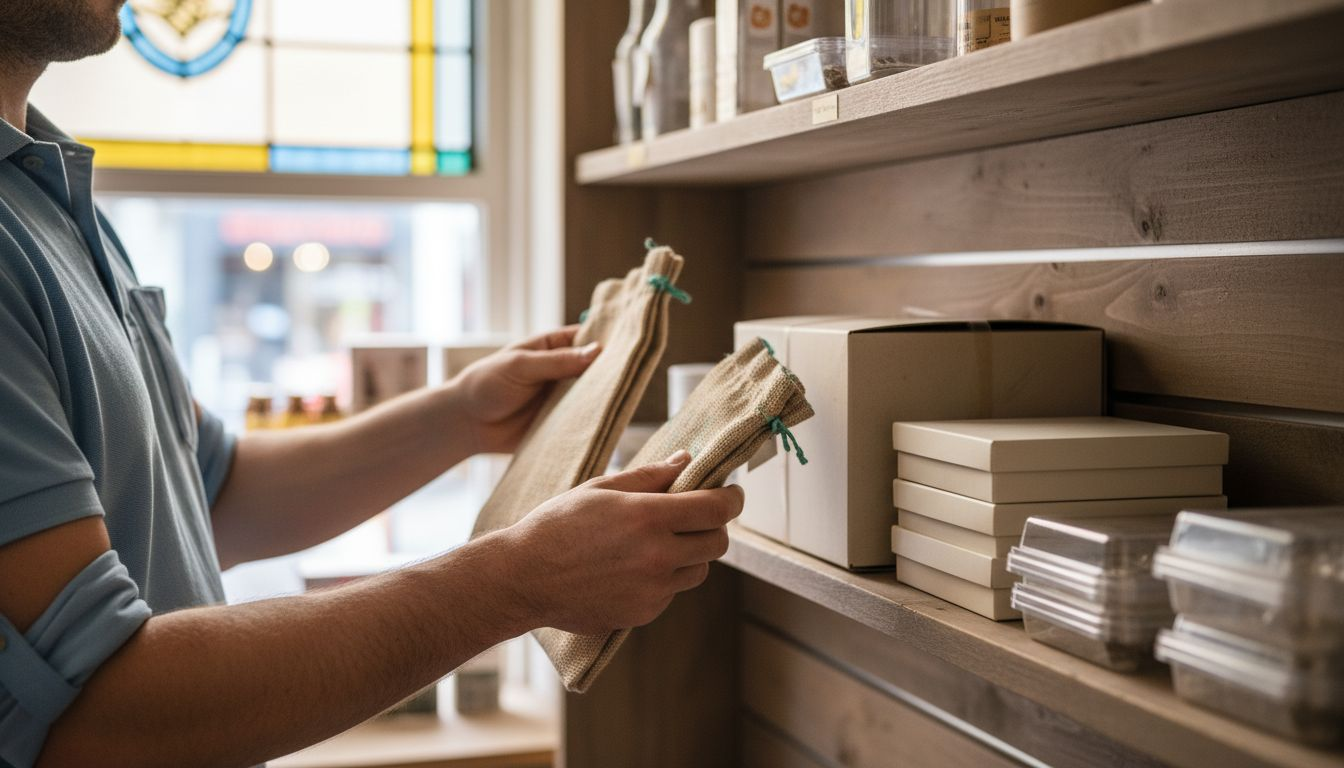
The key to effective reusability lies in choosing materials that can withstand repeated use. Reusable packaging requires cleaning and return logistics systems that maintain the material's quality without damage. This means that a canvas bag washed ten times should still retain the same strength and color. This is important for your store because it determines how long your customers will use the packaging and therefore the true extent of your sustainability benefit.
Here are the most practical gift shopping options:
- Textile bags and pouches (jute, linen, canvas) with possible embroidery
- Cardboard boxes with special protective layer against moisture
- Reusable plastic containers with closure systems
- Woven baskets and wicker boxes for larger gifts
- Fabric ribbons and accessories that can be used multiple times
Each material serves a different purpose. Luxury textiles attract customers who value quality and the environment. Cardboard is cost-efficient and suitable for standard packaging. Plastic is durable and easy to clean. Combining these materials in your product range gives you the flexibility to meet different customer expectations and increase their loyalty.
Below you will find an overview of materials and their business impact on reusable gift packaging:
| Material type | Sustainability | Customer perception | Business impact |
|---|---|---|---|
| Jute & canvas | Very high | Luxurious, environmentally conscious | Strengthens brand loyalty |
| Treated cardboard | Average | Modern, practical | Low cost, recyclable |
| Plastic polymer | High | Functional, robust | Lower waste costs |
| Reed & woven | High | Authentic, decorative | Creates repeat visits |
Practical tip: Select at least two material types in your range so that customers can choose what suits their values, and monitor which variant is reused the most.
Benefits for stores and customer relations
Reusable gift packaging offers your store more than just environmental awareness. It creates a distinctive brand that sets you apart from your competitors. When customers receive a gift in beautiful, reusable packaging, they'll remember your store every time they reuse that packaging. This is free advertising. A customer who refills your string bag with a gift for a friend three months later carries your brand identity with them. This type of brand awareness happens organically , without any additional marketing expenditures.
Customer relationships also deepen because consumers appreciate when a store genuinely contributes to waste reduction. Using reusable packaging strengthens customer loyalty because consumers appreciate when stores contribute to sustainability . This goes beyond just a one-time purchase. Customers who share your sustainable values become regular returners. They recommend your store to their friends and family and leave positive online reviews. This loyalty is much stronger than that of customers who only consider price.
Furthermore, clear communication about your sustainability policy can significantly enhance your brand image. This can be done through your website, packaging itself, or by talking to customers in-store. Explain why you're making this choice and what difference it makes. Customers want to hear these stories. This also creates an emotional connection with your brand. A store that is transparent about its sustainability ambitions feels authentic and can even justify higher prices because customers know their purchase truly means something positive.
From a business perspective, this also offers advantages. Reusable packaging reduces waste costs in the long run, especially if you set up a return logistics system where customers return packaging. Some retailers see this as a winning mechanism: customers might pay a little more for the product, but they receive attractive packaging that they can return for a discount on future purchases.
Practical tip : Set up a returns program where customers can return reusable packaging for, say, a €1 to €2 discount on their next purchase. This encourages repeat visits and deepens customer relationships.
This overview will help you choose a suitable returns program for stores:
| Return program type | Benefit for customer | Effect on return percentage | Costs for store |
|---|---|---|---|
| Discount on return | Direct financial benefit | Increasing sharply | Limited by discount amount |
| Savings system | Build up of points | Stable, slow growing | Administrative costs |
| Free collection point | Convenience, no threshold | Variable, depending on communication | Low fixed costs |
| Deposit option | Refund as motivation | Very high | Temporary cash flow needed |
Costs, savings and environmental impact
The financial reality of reusable gift packaging is nuanced. Yes, you initially pay more per package than for disposable material. A luxury canvas bag, for example, costs two to three times as much as standard wrapping paper. But this is where many retailers get it wrong. This isn't a loss; it's an investment with a return. Reusable packaging may have a higher initial cost, but in the long run, it leads to significant savings through reuse. When the same package is used ten times instead of ten different disposable packages, you actually pay 80 percent less per use.
The savings come from several sources. First, you significantly reduce waste management costs because customers take the packaging with them instead of having it end up in your recycling bin. Second, if you set up a deposit or reverse logistics system , you generate additional revenue. For example, customers pay two euros for a nice piece of packaging and get it back when they return it. This money circulates and can even generate additional margin. Some retailers use this to offer their reusable packaging free of charge in exchange for a deposit, which attracts customers.
The environmental benefits are substantial if your system functions well. Less waste, reduced CO2 emissions, and a smaller ecological footprint. But beware: this only works if the return rates are high . If you send out a hundred beautiful bags but only get twenty back, the system is inefficient. That's why logistical efficiency is crucial. Make it easy for customers to return them, for example, through collection points in your store or a simple returns policy. The higher the return rate, the better your environmental benefit and the faster you'll break even.
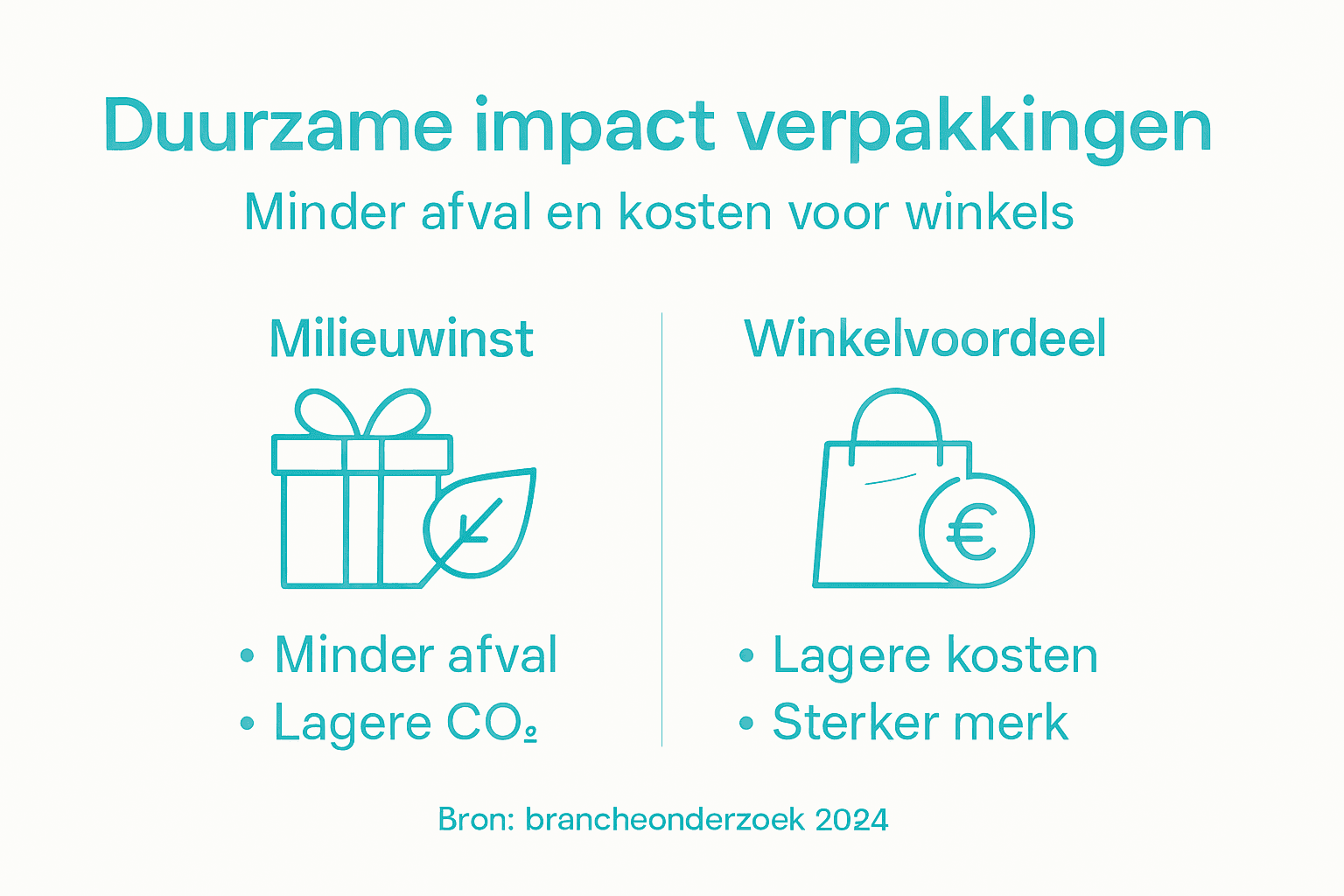
What does this mean in practice? Start small. Don't go out and buy a hundred reusable boxes right away. Choose one type of packaging, carefully track your sales and returns, and measure your savings on waste costs. After three months, you'll have real data instead of guesswork. Many retailers find they break even after six months and continue to save money from then on.
Practical tip: Determine how much packaging you use per month and compare the total costs, including deposit management, with your current waste management costs and disposable packaging expenses. This will give you an accurate payback period.
Common mistakes and what to look out for
Many retailers enthusiastically embrace reusable packaging, but stumble over the same obstacles. The biggest mistake is underestimating what's needed to make the system truly work. You can't just put pretty canvas bags in your store and hope for the best. A good returns and cleaning system is essential for reusable packaging, and many retailers neglect this aspect. This is fatal, because without a clean and well-organized returns mechanism, your packaging simply ends up lying around or being thrown away. So, make sure you have a clear plan from day one: where customers will return packaging, how you'll ensure cleaning, and who will manage this process.
The second common mistake is poor customer communication. You know how the system works, but customers don't. If someone receives a gift in reusable packaging without any explanation, they might assume it's part of the gift and put it away. Or they might not know where to return it. Provide clear instructions on the packaging itself, on your website, and in your store. Explain why you're doing this and what the customer needs to do. This small communication prevents major frustration later.
A third mistake is choosing materials that aren't durable enough. Not every material can be used and washed repeatedly without wear or damage. A cheap synthetic bag can discolor or become damaged after just three washes. This undermines your entire sustainability claim. Test your materials before purchasing them in bulk. Wash a sample five times to check the quality.
Finally, many retailers forget that reusability only works if the packaging is actually reused. If your returns rate is below 30 percent, your system is inefficient. Make returns easy and appealing. Some retailers offer discounts for returns, while others have collection points in their stores. Experiment with what works for you.
Practical tip: Implement your system on a small scale with one type of packaging at first and track return rates closely for two months before expanding.
Increase the impact of your sustainable gift packaging
Reusable gift packaging requires thoughtful choices with strong materials and an efficient return and cleaning system. For stores taking on this challenge, it's essential to work with high-quality and versatile packaging products that strengthen customer loyalty and contribute to a lower environmental footprint. At Kadopapier.net, you'll find a wide range of sustainable packaging solutions, such as sturdy gift bags, cardboard boxes, and eco-friendly ribbons, all perfectly aligned with the principles of reuse and circular packaging.
Make it easy for your customers to make conscious choices and provide packaging they'll want to reuse and appreciate. Carefully selected materials that can withstand repeated use make all the difference for your brand and strengthen your sustainable image. Discover the possibilities that will set your store apart from the competition and encourage repeat visits by investing in sustainable packaging. Visit the website and instantly find the products that will transform your store in terms of sustainability and customer engagement at Kadopapier.net , or browse our selection of specific packaging materials that encourage reuse, such as gift bags and cardboard boxes.
Don't wait until later and take the step towards a more sustainable and profitable packaging approach for your gift shop today.
Frequently Asked Questions
What is reusable gift packaging?
Reusable gift packaging is packaging materials designed to be used multiple times, such as boxes, bags, and ribbons made from sustainable materials. They reduce waste and become part of the gift-giving experience.
What materials are used for reusable gift packaging?
Reusable gift packaging is primarily made of textiles (such as jute and canvas), durable plastic, and specially treated cardboard. Each material offers its own advantages, such as sustainability and aesthetics.
How can I use reusable packaging in my store?
You can start with a small selection of reusable packaging, such as string bags or luxury cardboard boxes. Then gauge customer response and gradually expand the range.
What are the benefits of reusable gift packaging for my customers?
Reusable gift packaging strengthens brand loyalty, increases customer loyalty, and creates a positive impression of your store. Customers also appreciate the sustainability and reusability of the packaging.
Recommendation
- Lush Packaging Materials: Sustainability for Retail – Kadopapier.net
- 7 Summer Gift Wrapping Inspiration Tips for Entrepreneurs – Kadopapier.net
- Understanding Reusable Gift Bags: What and Why? – Kadopapier.net
- 7 Gift Card Packaging Tips for Gift Shops in the Netherlands – Kadopapier.net
- Le sac banane is a bon gift?