


Plastic packaging materials – Sustainability and regulations
Choosing the right plastic packaging materials can be a challenge for any gift retailer who values both quality and the environment. European regulations are becoming stricter, and consumers increasingly expect conscious packaging choices. This guide will help you, as a retailer, discover how to select sustainable plastic packaging materials that not only enhance your presentation but also meet the requirements of a circular economy .
Table of contents
- Plastic packaging materials and sustainability
- Types of plastic packaging materials explained
- Key Features and Applications
- European regulations and environmental requirements 2026
- Risks, costs and sustainable alternatives
Submissions of Key Points
| Point | Details |
|---|---|
| Transition to a Circular Economy | There is an urgent need for sustainable solutions in plastic packaging to reduce the environmental impact. |
| Role of the European Union | Legislation obliges manufacturers to make more sustainable packaging choices, essential for the industry. |
| Sustainable Alternatives | Innovative materials such as bioplastics and recycled plastics hold great promise for the future. |
| Increased Rules and Expectations | Manufacturers must prepare for stricter environmental requirements and consumer expectations regarding packaging. |
Plastic packaging materials and sustainability
The future of plastic packaging is under increasing pressure from a sustainability perspective. With the current exponential growth in plastic use and its associated environmental impact, the need to develop sustainable solutions is becoming increasingly urgent. Scientific research on circular plastics points to crucial changes needed in our approach to packaging materials.
The central goal is a transition to a more circular economy where plastic no longer burdens the environment. Key strategies include:
- Reducing single-use plastics
- Stimulating high-quality recycling
- Developing biobased alternative materials
- Promoting the reuse of packaging
The European Union is playing a significant role in this transformation by introducing legislation that compels manufacturers to make more sustainable choices. Policy instruments for sustainability specifically focus on reducing fossil fuels and promoting circular production processes.
For gift shops and retailers, this means a critical reassessment of their packaging strategies. It's not just about environmental awareness, but also about anticipating future regulations and consumer expectations.
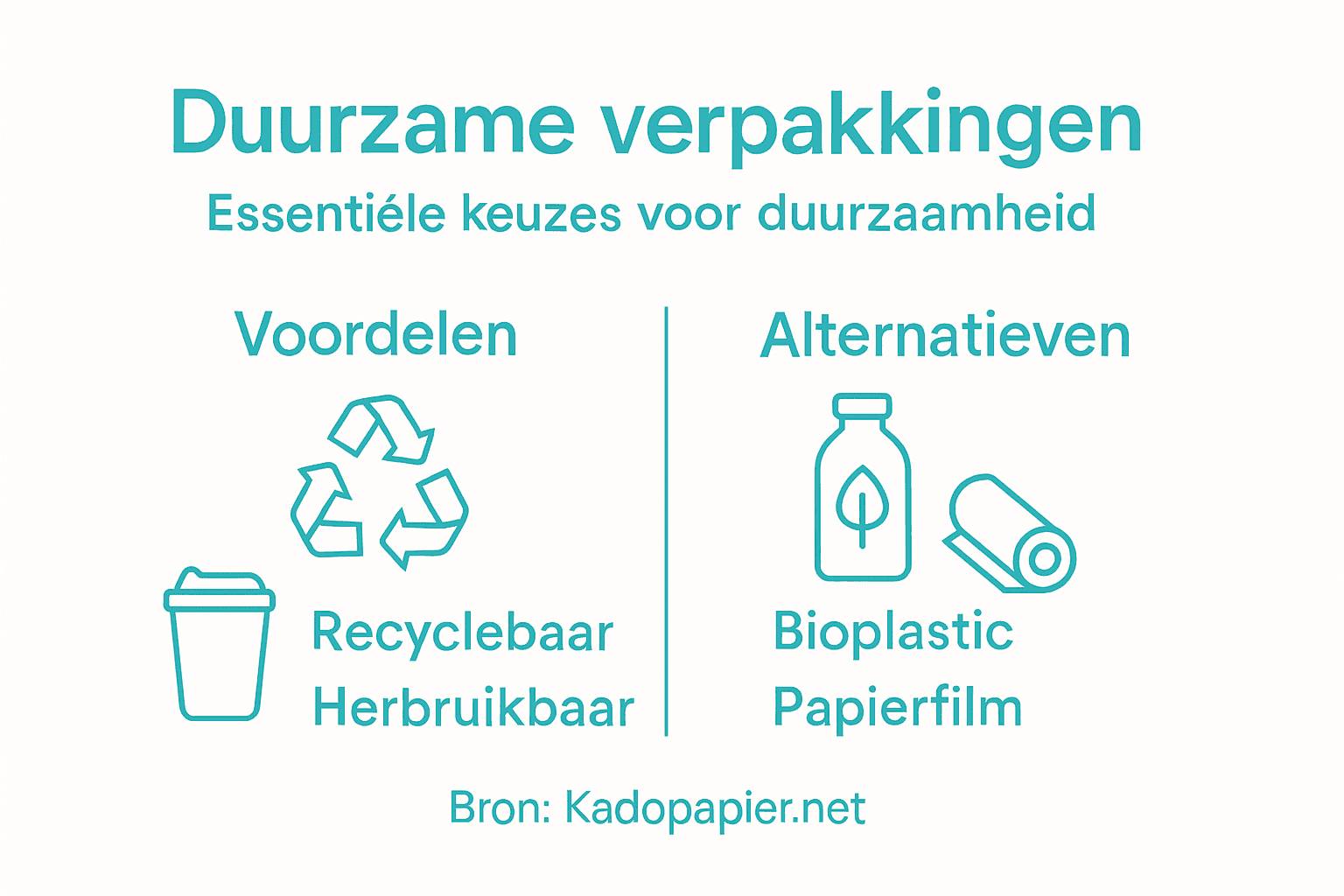
Pro tip: Invest in modular, reusable packaging materials that are easily recycled and use minimal resources.
Types of plastic packaging materials explained
In the world of packaging materials, different types of plastic play crucial roles, each with unique properties and applications. Common plastic packaging types range from flexible films to rigid plastic containers, each fulfilling specific protective and transport functions.
The main categories of plastic packaging materials include:
- PET bottles : Light, transparent and suitable for drinks
- HDPE containers : Robust and ideal for milk and cleaning products
- LDPE films : Flexible and widely used in food packaging
- PP containers : Heat resistant and often used in the food industry
- PS packaging : Lightweight and suitable for disposable products
Within the different material types, each type has its own specific environmental characteristics and recycling potential. National product group analyses show that the share of recycled plastic varies by material type, highlighting the complexity of sustainable packaging strategies.
For retailers and manufacturers, it's essential to choose the right packaging materials that are both functional and environmentally friendly. This requires detailed knowledge of the properties and capabilities of each type of plastic.

Here's an overview of the main types of plastic packaging materials, with their typical applications and environmental potential:
| Type of plastic | Typical application | Recycling potential |
|---|---|---|
| PET | Bottles for drinks | High, much collected |
| HDPE | Bottles and containers | Highly recyclable |
| LDPE | Foils, bags | Lower, difficult to sort |
| PP | Containers, food packaging | Fairly recyclable |
| PS | Disposable tableware, trays | Difficult to recycle |
Pro tip: Choose plastic packaging materials that are easily recyclable and have minimal environmental impact.
Key Features and Applications
Plastic packaging materials are complex and versatile, with properties that make them suitable for countless applications. Circular plastic packaging must meet increasingly stringent requirements, such as airtightness, food safety, and recyclability.
The main features of plastic packaging materials include:
- Protective function : Prevents external contamination
- Durability : Light and strong at the same time
- Flexibility : Adaptable to different shapes and products
- Hygiene : Prevents bacterial contamination
- Weight saving : Reduces transportation costs
Various sectors use plastic packaging for a variety of applications. Plastic packaging solutions cover a broad spectrum, from food packaging to medical applications, building materials, and consumer products.
The challenge lies in balancing functionality with environmental awareness. Modern packaging strategies must not only be practical but also meet increasingly stringent sustainability requirements.
Pro tip: Choose packaging materials that are both functional and recyclable, and cause minimal environmental impact.
European regulations and environmental requirements 2026
The European Union is strongly committed to sustainable packaging directives that will transform the entire packaging industry in the coming years. New European packaging regulations introduce binding measures to reduce packaging waste and improve recyclability.
The main environmental requirements for 2026 include:
- Mandatory recyclability : Minimum 65% of all packaging
- Restriction of harmful substances : Stricter controls on chemical composition
- Reuse targets : Concrete percentages for reusable packaging
- Reduction of packaging material : Reduction of excess packaging
- Transparency : Better consumer information on environmental impact
For manufacturers and retailers, this means significant changes in design, materials used, and production processes. The regulations force companies to actively work on more sustainable packaging solutions that have a lower environmental impact.
The transition requires innovative approaches and investments in new technologies that meet the stricter European environmental standards. Companies will have to fundamentally revise their packaging strategies.
Pro tip: Anticipate the new EU regulations by investing now in recyclable and environmentally friendly packaging materials.
Risks, costs and sustainable alternatives
Choosing packaging materials involves complex considerations, requiring careful weighing of risks, costs, and sustainability. Cost reduction strategies require a balanced approach that considers both financial and environmental considerations.
Major risks associated with plastic packaging materials include:
- Environmental impact : Long decomposition times and microplastic pollution
- Health risks : Possible chemical migration into food
- Reputational damage : Negative perception due to environmental impact
- Future regulatory risks : Stricter legislation
- Economic vulnerability : Rising commodity prices
Sustainable alternatives offer promising solutions to these challenges. Innovative materials like bioplastics, recycled plastics, and plant-based packaging are rapidly gaining ground as responsible replacements for traditional plastic packaging.
The transition to sustainable packaging requires initial investment, but delivers significant long-term benefits: cost reduction, improved brand perception, and compliance with future environmental regulations.
Below is a comparison of sustainable alternatives versus traditional plastic on key aspects:
| Aspect | Traditional plastic | Sustainable alternative |
|---|---|---|
| Raw material use | Fossil resources | Plant-based or recycled |
| Degradability | Bad, long lasting | Often biodegradable |
| Investment costs | Low to medium | Usually higher in the initial phase |
| Impact on brand perception | Negative on environmental issues | Improves green image |
Pro tip: Conduct a detailed life cycle analysis to compare the true costs and environmental impact of different packaging materials.
Choose sustainable plastic packaging with Kadopapier.net
The challenge of complying with stricter European regulations while simultaneously packaging in an environmentally friendly way is significant. The article emphasizes the importance of recyclability, reuse, and minimizing plastic waste. For many retailers and manufacturers, choosing appropriate and sustainable packaging materials is essential to prevent risks such as reputational damage and future fines.
At Kadopapier.net, we understand this urgency and offer a wide range of packaging that meets the latest sustainability criteria. From reusable gift bags to eco-friendly wrapping paper and decorative materials that are easily recyclable. This allows you to confidently invest in packaging that meets the 2026 European environmental requirements while making a positive impression on customers.
Visit our website today and discover our offerings perfectly suited to the challenges surrounding plastic packaging and sustainability. Kadopapier.net helps you step by step with smart, environmentally conscious packaging solutions that are also cost-effective.
Frequently Asked Questions
What are the main benefits of sustainable plastic packaging?
Sustainable plastic packaging reduces environmental impact by using recycled materials, improves recyclability and supports a circular economy.
How can I choose the best plastic packaging material for my products?
Choose plastic packaging that meets your product's functionality, is easily recyclable, and has minimal environmental impact, such as PET or HDPE.
What are the new European regulatory requirements for plastic packaging in 2026?
The regulations include mandatory recyclability of at least 65%, stricter controls on harmful substances and targets for reusable packaging.
What are some sustainable alternatives to traditional plastic packaging materials?
Sustainable alternatives include bioplastics, recycled plastics, and plant-based packaging, which have a lower environmental impact and often have better biodegradability.
Recommendation
- Lush Packaging Materials: Sustainability for Retail – Kadopapier.net
- Sustainable packaging materials: Environmental impact and regulations – Kadopapier.net
- 7 Summer Gift Wrapping Inspiration Tips for Entrepreneurs – Kadopapier.net
- Biodegradable Packaging Materials: Sustainability and EU Legislation – Kadopapier.net
- Can Hair Extensions Be Eco-Friendly?