


Sustainable packaging materials: Impact on the environment and regulations
More than 60 percent of packaging in Central Europe still ends up in landfills instead of being recycled. For sustainability-minded businesses, this presents clear opportunities to make a difference with environmentally friendly packaging materials. You'll discover which innovative solutions actually contribute to lower CO2 emissions and how your company can stand out among customers who consistently value sustainability.
Table of contents
- What is sustainable packaging material?
- Types and characteristics of sustainable materials
- Environmental impact and circularity of packaging
- EU legislation and compliance requirements
- Practical benefits for companies
- Common mistakes and risky choices
Key Points of Interest
| Point | Details |
|---|---|
| Sustainable Packaging Materials | Contributes to minimizing environmental impact through the use of renewable raw materials and maximum recyclability. |
| Circular Economy | Smart design and innovative material compositions reduce waste and promote the reuse of raw materials. |
| EU Legislation and Compliance | Sets strict requirements for packaging, including reduction of raw material consumption and recycling targets. |
| Benefits for Businesses | Increases brand perception and customer loyalty through transparent sustainability strategies and cost savings. |
What is sustainable packaging material?
Sustainable packaging materials are an innovative solution that focuses on minimizing environmental impact during production, use, and disposal. They go beyond traditional packaging by considering the total ecological impact throughout the material's entire lifecycle.
The key features of sustainable packaging materials are their focus on renewable resources, environmentally friendly production methods, and maximum recyclability. These materials are developed with specific properties such as:
- Reduced CO2 emissions during production
- Use of biodegradable components
- Maximum reusability
- Minimal environmental impact
The goal of sustainable packaging materials is twofold: on the one hand, to mitigate climate change by reducing emissions , and on the other, to protect natural ecosystems. Through smart design and innovative material composition, these packages contribute to a circular economy where waste is minimized and raw materials are reused.
Pro tip: Always check the recycling instructions on packaging materials to maximize their sustainability credentials.
Types and characteristics of sustainable materials
In the world of sustainable packaging materials, we distinguish several innovative types specifically designed to minimize environmental impact. Bio-based plastics and recycled materials are at the heart of modern sustainable packaging solutions , each with unique properties that contribute to a more circular economy.
The main types of sustainable packaging materials include:
- Bio-based plastics : Made from renewable resources such as corn starch or sugar cane
- Recycled materials : Made from already used plastics or paper products
- Biodegradable materials : Can be completely broken down by microorganisms
- Wood fiber composites : Sustainable alternatives with minimal environmental impact
A crucial characteristic of modern sustainable packaging materials is their ability to meet strict European labeling and quality requirements . The EU Ecolabel plays a key role in this, considering aspects such as reusability, recyclability, and the absence of harmful chemicals.

Below you will find an overview of the most important sustainable packaging materials and their unique business applications:
| Material type | Business application | Impact on brand value | Example industry |
|---|---|---|---|
| Bio-based plastics | Alternative to plastic packaging | Strengthens environmentally friendly image | Food, cosmetics |
| Recycled materials | Packaging with recycled content | Increase transparency and trust | Retail, logistics |
| Biodegradable materials | Minimizes waste stream | Stimulates sustainability claims | Hospitality, events |
| Wood fiber composites | Premium ecological packaging | Differentiation as an innovator | Luxury products, electronics |
Pro tip: Always check the specific recycling and reuse instructions of packaging materials to make the most of their sustainability credentials.
Environmental impact and circularity of packaging
Packaging materials pose a complex sustainability challenge, with each step in the lifecycle having significant environmental consequences.The production of primary plastics contributes significantly to global greenhouse gas emissions , making the choice for circular materials crucial for future environmental protection.
The environmental impact of packaging can be reduced by:
- Use of recycled raw materials
- Design focused on reuse
- Minimizing material consumption
- Promoting local recycling processes
The European Union plays a crucial role in promoting sustainable packaging strategies aimed at reducing waste streams. This includes not only recycling but also fundamentally redesigning packaging processes to reduce primary raw material consumption and support a low-carbon economy.
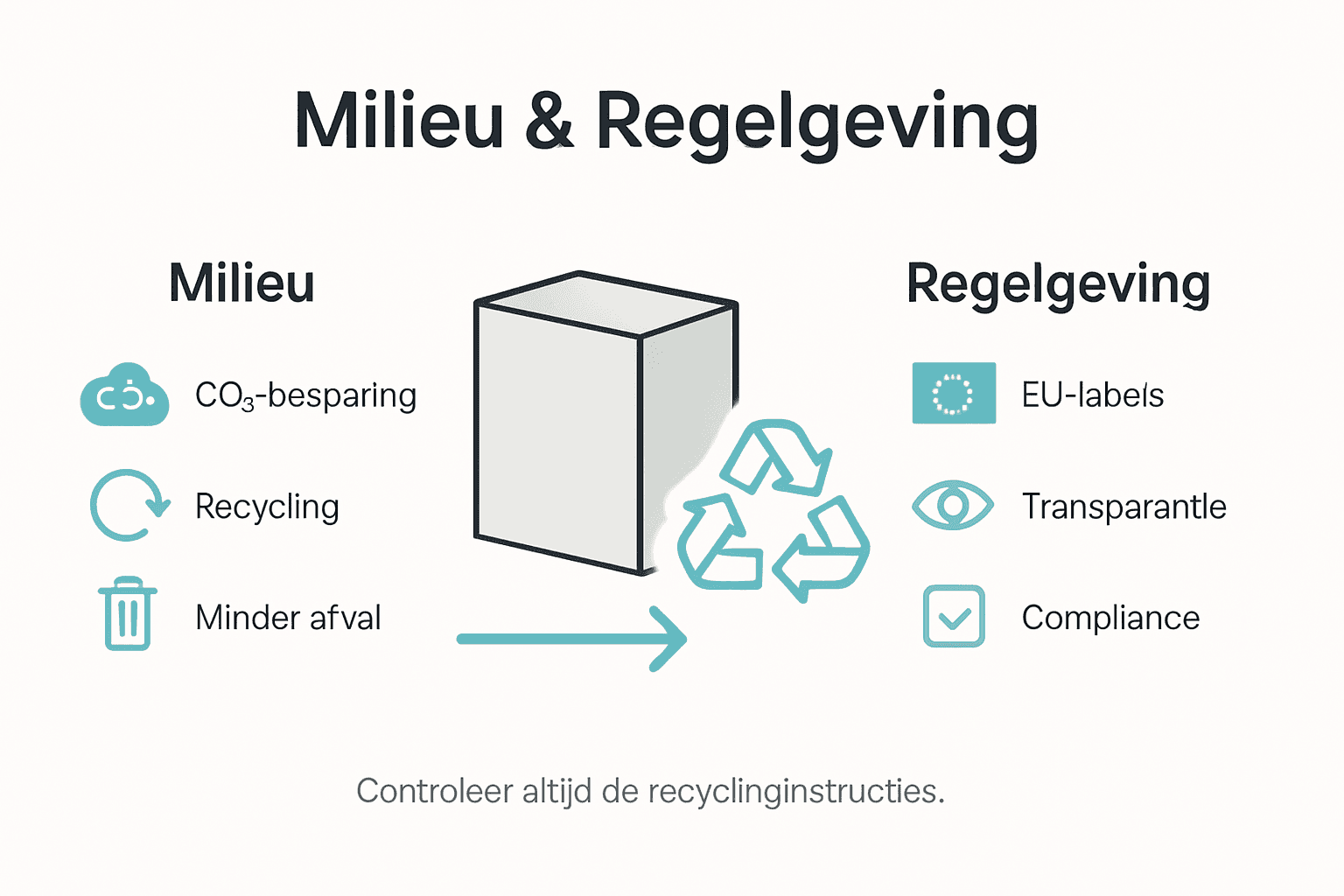
Discover how circular strategies influence the environmental impact of packaging:
| Strategy | Direct benefit | Sustainability result | Possible challenge |
|---|---|---|---|
| Use of recycled raw materials | Less waste in the chain | Lower CO2 emissions during production | Quality control of recycled material |
| Design for reuse | Extends the life of packaging | Reduces the need for new raw materials | Adjusting consumer behavior |
| Recycle locally | Rapid processing and reuse | Less transport related to recycling | Depending on local infrastructure |
Pro tip: When purchasing packaging materials, always choose products with a demonstrably sustainable production process and recyclability guarantee.
EU legislation and compliance requirements
European packaging regulations constitute a complex and dynamic legislative framework aimed at fundamentally transforming the environmental impact of packaging materials. EU Regulation 2025/40 introduces binding rules regulating the entire lifecycle of packaging , with the primary objective of promoting a more circular and sustainable economic practice.
The main compliance requirements for packaging materials include:
- Mandatory reduction of primary raw material consumption
- Concrete recycling targets per material type
- Strict standards for reusability
- Environmental impact reporting obligations
EU legislation creates a harmonized regulatory framework that obliges companies to be transparent and accountable . This system compels manufacturers to review their entire production process, from raw material selection to waste management, with the ultimate goal of significantly reducing environmental impact.
Pro tip: Consult the latest EU guidelines every quarter to ensure continued compliance with the latest sustainability standards for packaging materials.
Practical benefits for companies
Sustainable packaging materials offer companies much more than just environmentally friendly solutions. Companies can achieve significant strategic advantages through conscious material choices , focusing on innovation, cost-efficiency, and brand image.
The main practical benefits include:
- Improving brand perception
- Cost savings through more efficient use of materials
- Increased customer loyalty
- Faster adaptation to future regulations
Companies that proactively implement sustainable packaging strategies can anticipate legal obligations while simultaneously reducing their operational costs. By being transparent about environmental efforts, organizations build greater trust with consumers and stakeholders.
Pro tip: Develop a detailed sustainability strategy that sets concrete, measurable goals for packaging reduction and recycling.
Common mistakes and risky choices
Companies often make critical mistakes in the selection and implementation of packaging materials by failing to perform adequate risk analyses that address environmental and safety aspects .
The most common risky choices are:
- Ignoring recycling requirements
- Using cheap, non-sustainable materials
- Insufficient attention to legal standards
- Lack of a long-term strategy
Neglecting regulations can lead to significant fines and reputational damage for companies. Companies must proactively review their packaging strategies, taking into account environmental impact, regulatory requirements, and future sustainability developments.
Pro tip: Conduct a thorough audit of your packaging materials annually to identify potential risks and opportunities for improvement early.
Sustainable packaging that really makes a difference
The challenge of sustainable packaging materials lies in finding solutions that are both environmentally friendly and fully compliant with the latest European regulations. When reducing CO2 emissions and embracing circular materials, it's essential to choose packaging that is easy to recycle and simultaneously strengthens your brand value. The use of high-quality, sustainable products like biodegradable paper and recycled materials plays a crucial role in this.
Want to improve your packaging strategy with a range that's both environmentally conscious and user-friendly? Discover a wide selection of sustainable packaging materials at Kadopapier.net , including wrapping paper and gift bags that meet the strictest sustainability requirements. Start packaging today in a way that's good for both the environment and your business. Visit Kadopapier.net and choose smart packaging solutions that will delight your customers and the planet.
Frequently Asked Questions
What is sustainable packaging material?
Sustainable packaging materials are designed to minimize environmental impact throughout their life cycle, with a focus on renewable resources and recyclability.
What types of sustainable packaging materials are there?
Common types include bio-based plastics, recycled materials, biodegradable materials, and wood fiber composites.
How can I reduce the impact of packaging on the environment?
This can be achieved by using recycled raw materials, designing packaging for reuse and minimising material consumption.
What are the key compliance requirements under EU legislation for packaging materials?
Key compliance requirements include reduction of primary raw material consumption, recycling targets, reusability standards, and environmental impact reporting obligations.
Recommendation
- Recycling Packaging Materials: Complete Guide 2025 – Kadopapier.net
- Top Gift Bag Wholesale - Best Comparisons 2025 - Kadopapier.net
- Alternative packaging materials for every industry – Kadopapier.net
- Biodegradable wrapping paper: Sustainable and stylish packaging material – Kadopapier.net
- Impactul ambalajelor asupra mediului inconjurator: 20 solutii ᐈ