


Biodegradable packaging materials: Sustainability and EU legislation
Gift shops in Central Europe often face the challenge of choosing the right packaging material that is truly eco-friendly and meets modern customer expectations. A growing number of shoppers are demanding sustainable alternatives that are not only safe for the environment but also contribute to a circular economy. Biodegradable packaging, such as bioplastics made from corn, sugarcane, or mycelium, offers an innovative solution. In this article, you'll discover the key differences and smart options that will make your store greener.
Table of contents
- What is biodegradable packaging material?
- Types and properties of environmentally friendly materials
- Difference between biodegradable and compostable
- Current EU legislation and certification requirements
- Risks, costs and common mistakes
- Alternatives and hybrid packaging strategies
Important Points
| Point | Details |
|---|---|
| Biodegradable materials | These materials are designed to break down quickly and completely without leaving harmful residues. |
| Difference between biodegradable and compostable | Compostable materials meet stricter requirements and must break down within a specific time. |
| EU legislation and certification | The EU has set strict standards for biodegradable materials to ensure environmentally friendly packaging. |
| Risks in implementation | Companies should be aware of increased costs and complexity when transitioning to organic packaging solutions. |
What is biodegradable packaging material?
Biodegradable packaging materials are innovative solutions that address the growing need for environmentally friendly packaging options. These materials are designed to degrade quickly and completely in natural environments after use, leaving no harmful residues.
At the heart of biodegradable packaging are bioplastics like PLA, PHA, and PBS, which are produced from renewable resources like corn, sugarcane, or through bacterial fermentation. Innovative biomaterials enable the replacement of traditional plastics with sustainable alternatives that are fully compostable.
There are several types of biodegradable packaging materials, including:
- Mycelium packaging (made from fungal structures)
- Seafoam materials
- Plant-based fiber packaging
- Bioplastic solutions from organic raw materials
These materials are distinguished by their ability to completely degrade within a few months to a maximum of two years, depending on the specific composition and environmental conditions.
Pro tip: Always check the specific biodegradability properties of organic packaging materials before implementing them into your business processes.
Types and properties of environmentally friendly materials
Eco-friendly packaging materials represent an advanced generation of sustainable solutions that replace traditional plastics. These innovative materials are characterized by their ability to biodegrade and minimize their environmental impact.
The main eco-friendly material types can be divided into three primary categories:
- Bioplastics
- PLA (Polylactic Acid): Made from corn starch
- PHA (Polyhydroxyalkanoates): Produced by bacteria
- PBS (Polybutylene succinate): Biodegradable polymer
- Plant materials
- Mycelium packaging
- Seaweed-based packaging
- Hemp and bamboo composites
- Organic composite materials
- Cellulose fibers
- Protein-based packaging
- Recycled organic waste products
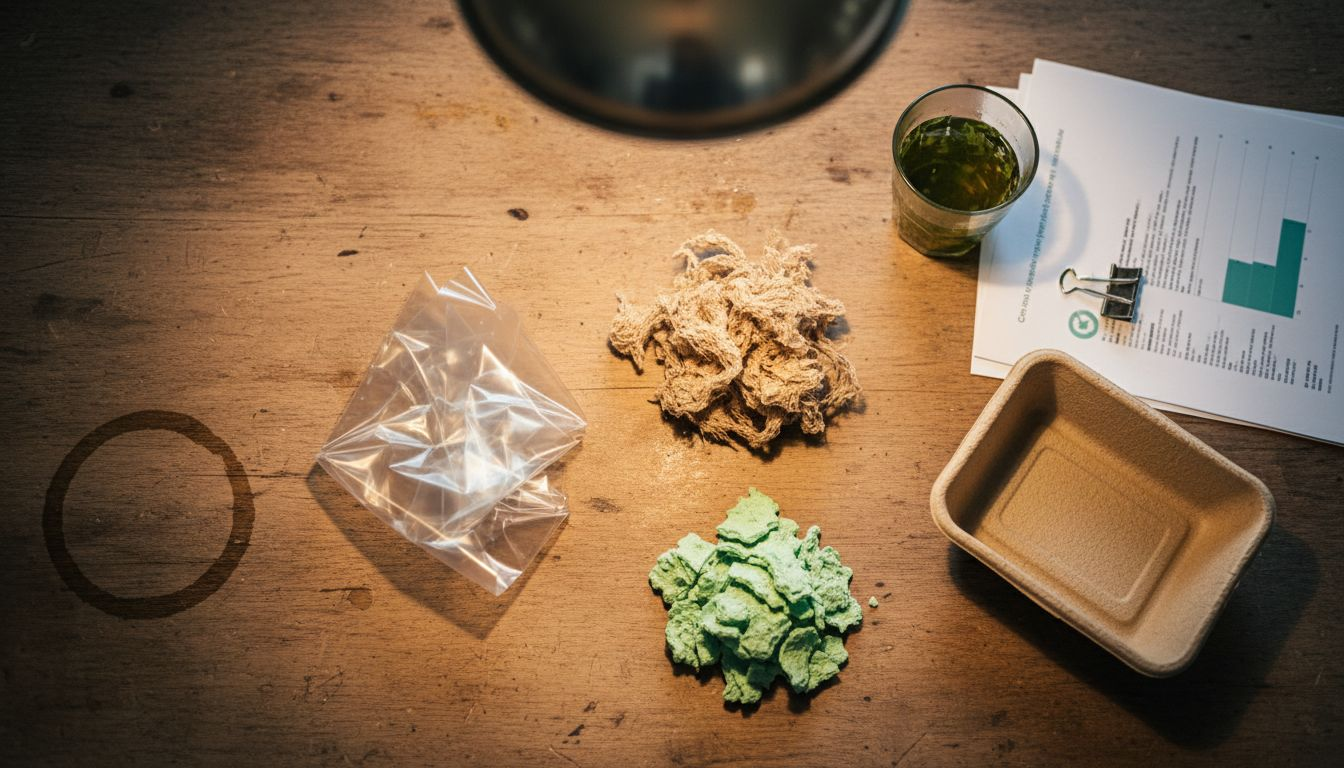
Each of these materials has unique properties, including rapid degradability, low CO2 emissions, and minimal environmental impact. They are produced from renewable resources and can be fully composted within a few months to two years.
Pro tip: When choosing your materials, let your product's specific packaging requirements guide you for the most optimal sustainable solution.
Difference between biodegradable and compostable
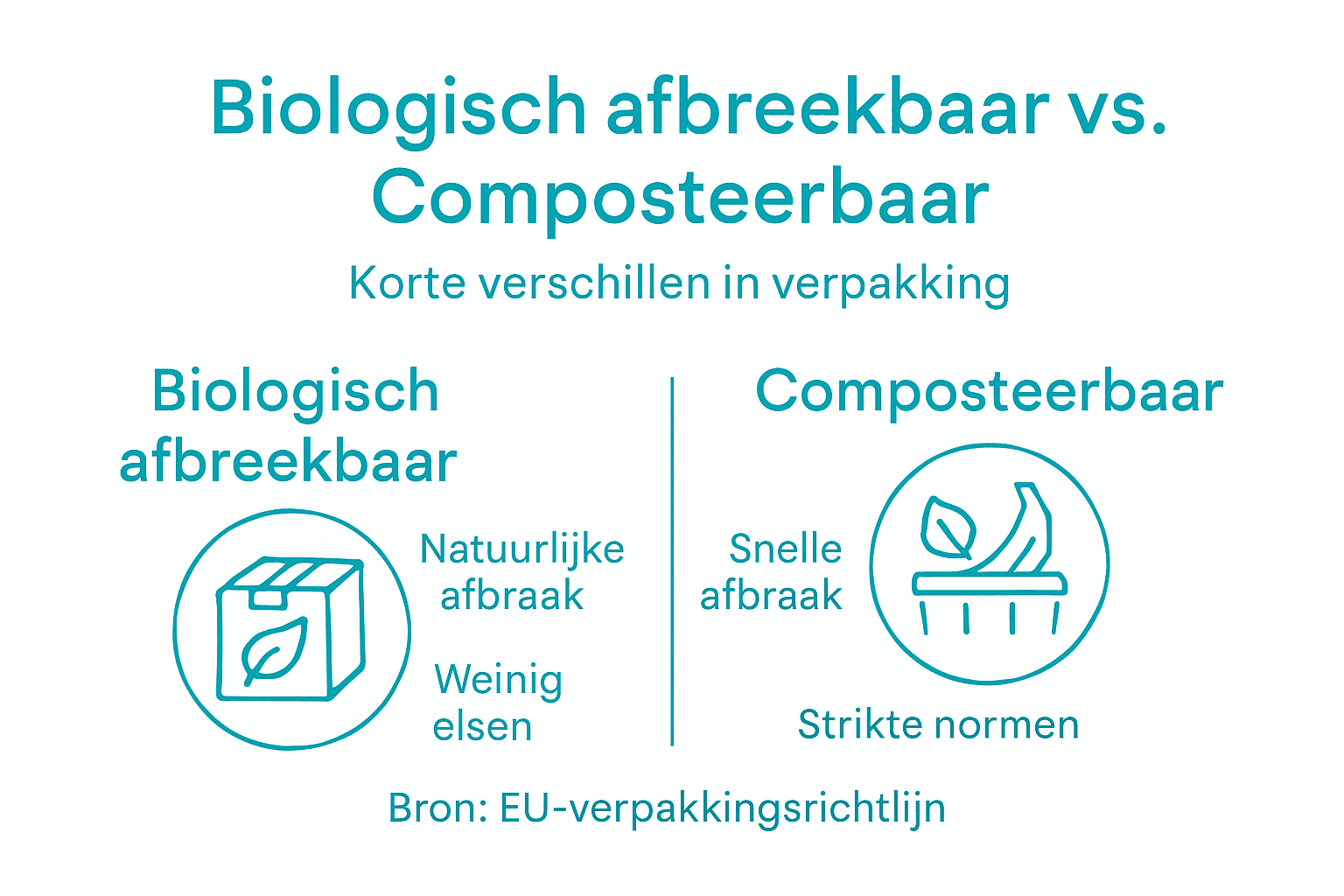
Biodegradable and compostable materials are often used interchangeably, but there are essential nuances that are crucial for environmentally-focused decision-making. Composting has specific technical requirements that go beyond simple biodegradability.
Biodegradable refers to materials that can be broken down into natural components by microorganisms. However, this process is not standardized and can vary in speed and completeness. While biodegradable materials can theoretically degrade, this is not necessarily environmentally friendly or rapid.
Compostable materials, on the other hand, meet much stricter criteria:
- Must be terminated within a specific time frame (usually 180 days)
- Are tested according to standardized norms such as EN13432
- May not leave harmful residues
- Can be converted into nutrient-rich compost
The main difference lies in the controlled conditions and quality requirements. Not all biodegradable materials are compostable, but all compostable materials are by definition biodegradable.
Below you will find a comparison table that summarizes the differences and similarities between biodegradable and compostable packaging materials:
| Characteristic | Biodegradable | Compostable |
|---|---|---|
| Decomposition conditions | Of course, not standardized | Specific, controlled (industrial composting) |
| Maximum breakdown time | Until a few years | Within 180 days according to standard |
| Residual residues | Possibly present | No harmful residues allowed |
| Certification | Not always required | Strictly prescribed, e.g. EN13432 |
| Applicability | Broader, but less predictable | Specifically for compostable situations |
Pro tip: Always check the specific compostability certification before selecting eco-friendly packaging materials.
Current EU legislation and certification requirements
In recent years, the European Union has developed strict regulations to reduce the environmental impact of packaging materials. Regulation (EU) 2025/40 is the core of this legislative strategy for sustainable packaging solutions.
The new European legislation focuses on several critical aspects of packaging production and processing:
- Mandatory reduction of primary raw material use
- Promoting reusable packaging materials
- Promoting recyclability
- Supporting circular economy principles
Specific certification standards apply to biodegradable materials, including the harmonized EN13432 standard. This standard specifies detailed requirements for:
- Degradability within specified time periods
- Disintegration properties
- Environmental hygienic quality of the remaining material
- Toxicity limits for compost results
Companies that want to produce biodegradable packaging must demonstrate that their materials meet these strict European guidelines, which requires thorough testing and certification.
Pro tip: Always consult the latest European standards before developing or selecting biodegradable packaging materials.
Risks, costs and common mistakes
Implementing biodegradable packaging materials presents numerous challenges that companies must carefully assess beforehand. EU legislation on packaging risks highlights the complexity of this transition.
The main risks and costs include:
- Increased production costs for new materials
- More complex processing processes
- Possible quality variations
- Higher initial investments in technology and research
Common mistakes with biodegradable packaging include:
- Incorrect labeling of materials
- Insufficient compostability under local conditions
- Inadequate consumer information about waste separation
- Mixing of different recycling flows
Companies must consider potential sanctions, reputational damage, and potential recalls if they fail to meet the strict European standards for sustainable packaging materials.
The following table provides an overview of common risks and mitigation strategies when using biodegradable packaging:
| Risk | Cause | Prevention strategy |
|---|---|---|
| Production costs are rising | New technologies | Efficient use of materials and economies of scale |
| Quality variation | Inconsistent raw materials | Strict supplier selection |
| Incorrect waste separation | Inadequate information | Consumer education and clear instructions |
| Failure to comply with EU standards | Insufficient knowledge of regulations | Obtain regular legal advice |
Pro tip: Invest in thorough education and clear instructions for consumers on the correct disposal of biodegradable packaging materials.
Alternatives and hybrid packaging strategies
The evolution of sustainable packaging solutions demands creative and flexible approaches that go beyond traditional materials. Hybrid packaging strategies are the new frontier in eco-friendly packaging.
These innovative strategies combine different material types:
- Reusable materials
- Wooden pallets
- Standardized plastic containers
- Metal transport containers
- Recyclable components
- Coated cardboard with biodegradable layer
- Polymer blends with increased recycling capacity
- Combined materials with multiple life cycles
- Biodegradable elements
- Compostable coatings
- Bioplastic hybrid solutions
- Natural fiber bonds
The aim of this hybrid approach is to optimise environmental performance, cost efficiency and practical applicability across various industries.
Pro tip: Analyze the full lifecycle of your packaging materials to determine the most sustainable hybrid strategy.
Make your packaging sustainable and future-proof
Biodegradable packaging is an important step toward a greener future, but it requires well-considered choices that comply with strict EU legislation and certifications such as EN13432. At Kadopapier.net, we understand that finding the right eco-friendly packaging that is both biodegradable and practical for your business can be challenging. That's why we offer a wide range of sustainable packaging materials that meet today's quality and environmental standards.
Discover our versatile collection, including eco-friendly wrapping paper, kraft and satin ribbons, and special recycled packaging solutions that perfectly comply with the standards described in the article. Let your packaging speak for your sustainability ambitions and ensure compliance with European guidelines with our products. Start your transition today by clicking on Kadopapier.net and experience for yourself how easy it is to package responsibly.
Want to choose the right material for your product and meet environmental requirements? Visit our website and make a sustainable choice that will delight your customers.
Frequently Asked Questions
What is biodegradable packaging material?
Biodegradable packaging materials are designed to decompose quickly in natural environments after use without leaving behind harmful residues. These materials often include bioplastics and other sustainable alternatives.
What is the difference between biodegradable and compostable?
Biodegradable refers to materials that can be decomposed by microorganisms under natural conditions, while compostable means that the materials can be converted into compost within a specific time and under controlled conditions without harmful residues.
What types of biodegradable packaging materials are there?
There are several types, including bioplastics such as PLA, PHA, and PBS, as well as plant fiber packaging, mycelium packaging, and seaweed-based materials.
What are the main requirements of EU legislation for biodegradable packaging?
EU legislation requires, among other things, the reduction of primary raw materials, the promotion of reusable materials, and strict certification requirements such as the EN13432 standard for biodegradable materials. Companies must demonstrate that their materials meet these environmental impact standards.
Recommendation
- Biodegradable Packaging: What and Why? – Kadopapier.net
- Biodegradable wrapping paper: Sustainable and stylish packaging material – Kadopapier.net
- Sustainable packaging materials: Environmental impact and regulations – Kadopapier.net
- Recycling Packaging Materials: Complete Guide 2025 – Kadopapier.net